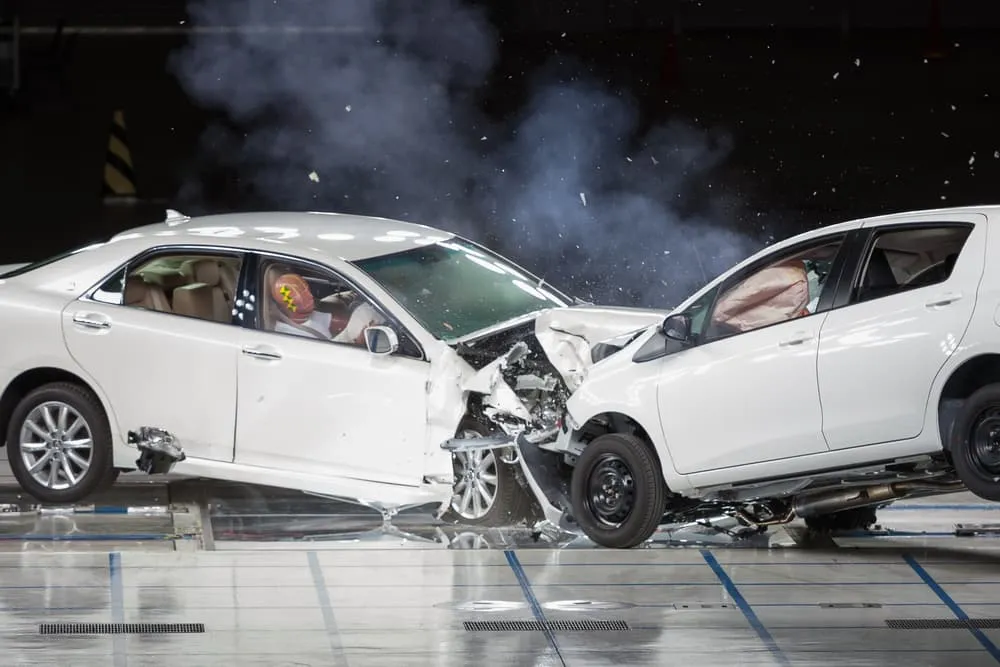
Head-on collisions are among the most dangerous and deadly crashes that occur on Wisconsin roads. Because two vehicles traveling in opposite directions absorb the combined force of both speeds at the moment of impact, head-on crashes produce injuries far more catastrophic than most other accident types. A crash between two cars each traveling at 45 mph does not create a 45 mph impact — it creates a collision equivalent to hitting an immovable wall at 90 mph.
If you or a loved one has been seriously injured — or lost someone — in a head-on collision in Wisconsin, you have legal rights. A Wisconsin car accident lawyer at Pemberton Personal Injury Law Firm can investigate the crash, establish who was at fault, and fight for the full compensation you deserve.
Key Takeaways:
- Head-on collisions are caused by one driver crossing the center line — due to distraction, impairment, fatigue, wrong-way driving, or reckless passing — and the driver who left their lane is typically at fault.
- The combined-speed physics of head-on crashes make them far deadlier than other collision types, producing severe injuries even at moderate speeds.
- Common injuries include traumatic brain injuries, spinal cord damage, chest and internal injuries, facial fractures, and lower extremity damage.
- Wisconsin follows a modified comparative fault system — you can recover as long as you are 50% or less at fault, but insurance companies will try to assign you blame to reduce their payout.
- Wisconsin head-on collision verdicts and settlements regularly reach six and seven figures — a $1.25 million verdict and a $2 million settlement have been reported for Wisconsin head-on crashes in recent years.
- A car accident attorney can gather crash evidence, reconstruct what happened, and fight for the maximum recovery available under Wisconsin law.
What Causes Head-On Collisions in Wisconsin?
Almost every head-on collision results from one driver leaving their proper lane and entering opposing traffic. The specific behavior that causes the lane departure varies, but the most common causes in Wisconsin include:
Distracted Driving
A driver who looks away from the road — to check a phone, adjust a GPS, or reach for something in the vehicle — can drift across the center line in seconds without realizing it. Distracted driving claims thousands of lives per year nationally and is a leading cause of center-line crossing crashes. When a distracted driver crosses into your lane, their inattention is the direct cause of the crash — and they are liable for your damages.
Impaired Driving
Alcohol and drugs impair the spatial judgment, reaction time, and lane-keeping ability that drivers need to stay on their side of the road. Intoxicated drivers are disproportionately involved in wrong-way and center-line crossing crashes, particularly late at night and on undivided two-lane highways. If an impaired driver caused your collision, their decision to drive under the influence makes their liability clear — and may support a claim for punitive damages in egregious cases.
Wrong-Way Driving
Wrong-way crashes occur when a driver enters a highway exit ramp heading in the wrong direction, drives against traffic on a one-way street, or makes a confused turn onto a divided road. These crashes are particularly deadly because they often occur at highway speeds with no time to react. Wrong-way driving is strongly linked to alcohol impairment, especially in nighttime crashes.
Fatigued Driving
Drowsy driving impairs reaction time and judgment in ways that closely resemble alcohol impairment. A fatigued driver may drift across the center line gradually without recognizing the danger, or may briefly fall asleep and lose control entirely. Long-haul truckers, overnight workers, and anyone driving after extended wakefulness are at elevated risk for fatigue-related crashes.
Reckless Passing and Speeding
Unsafe passing maneuvers on two-lane roads are a major source of head-on collisions. A driver who attempts to pass a slower vehicle without adequate visibility — cresting a hill, rounding a curve, or in a no-passing zone — can find themselves directly in the path of oncoming traffic with no time to return to their lane. Speeding compounds this problem by reducing both the time available to react and the space needed to complete a safe maneuver.
Poor Road Conditions
Ice, snow, standing water, and reduced visibility in Wisconsin winters create genuine challenges for all drivers. However, adverse conditions do not eliminate legal responsibility. A driver who fails to slow down, maintain safe following distances, or exercise appropriate caution in hazardous conditions is still liable for crashes that result from that failure. The obligation to drive safely for the conditions is a core element of every driver’s duty of care.
Why Are Head-On Collisions So Severe?
Unlike rear-end crashes or side-impact collisions, head-on crashes concentrate the full force of both vehicles directly into the front of each car and directly into the occupants. Head-on collisions account for a disproportionately high percentage of traffic fatalities relative to their frequency — the FHWA notes that while head-on crashes represent only about 2% of all crashes, they account for roughly 10% of highway fatalities.
Even at moderate speeds, the forces involved in a head-on impact can overwhelm airbags, seat belts, and vehicle crumple zones. The driver and front passenger bear the greatest risk, absorbing direct impact energy through the steering wheel, dashboard, windshield, and engine compartment intrusion.
Common Injuries in Wisconsin Head-On Collisions
Head-on crash injuries are frequently severe and life-altering. Common injuries include:
- Traumatic brain injuries (TBI): From the head striking the steering wheel, airbag, windshield, or side window. Severity ranges from concussion to permanent cognitive impairment.
- Spinal cord injuries: Compression, fracture, or shearing of vertebrae, potentially causing partial or complete paralysis.
- Chest injuries: Steering wheel impact and seatbelt loading can fracture ribs, injure the sternum, and cause aortic rupture or cardiac contusion — some of the most immediately life-threatening head-on crash injuries.
- Internal organ damage: The sudden deceleration forces internal organs forward against the abdominal wall and ribcage, causing ruptures or lacerations to the liver, spleen, or bowel.
- Facial fractures and injuries: Airbag deployment and contact with the steering wheel frequently cause nasal fractures, orbital fractures, and dental injuries.
- Lower extremity fractures: The engine compartment and firewall can intrude into the passenger space, trapping and crushing the legs and feet.
- Broken bones: Arms, collarbones, and pelvis fractures are common, often from bracing impact or seatbelt loading.
- Wrongful death: Head-on crashes are among the most fatal collision types in Wisconsin. When a loved one is killed, surviving family members may have the right to pursue a wrongful death claim for lost financial support, loss of companionship, and funeral costs.
Who Is at Fault in a Wisconsin Head-On Collision?
In the vast majority of head-on collisions, the driver who crossed the center line or traveled in the wrong direction is at fault. That driver violated their duty of care — the legal obligation to operate their vehicle within the proper lane — and that violation caused the crash.
However, fault is not always self-evident, particularly when:
- The at-fault driver denies crossing the center line
- A mechanical failure (tire blowout, brake failure) is claimed as the cause
- Road conditions or signage contributed to the wrong-way entry
- Another vehicle forced the at-fault driver into opposing traffic
- Multiple parties — such as a trucking company and its driver — share responsibility
Establishing fault requires evidence. Your attorney will work to preserve and analyze crash scene evidence including police reports, skid mark measurements, vehicle electronic data recorder (EDR/black box) data, dashcam or traffic camera footage, eyewitness statements, and accident reconstruction expert analysis. Acting quickly is critical — digital evidence can be overwritten and physical evidence at the scene disappears fast.
How Wisconsin’s Comparative Fault Law Affects Your Case
Under Wisconsin Statute § 895.045, your compensation is reduced by your percentage of fault. As long as you are 50% or less at fault, you can still recover — but your award is reduced proportionally. If you are found 51% or more at fault, you recover nothing.
Insurance companies defending at-fault drivers routinely try to shift blame onto the victim — arguing they were speeding, failed to take evasive action, or had a mechanical defect on their vehicle. An experienced attorney will counter these tactics and fight to ensure fault is assessed accurately.
What to Do After a Head-On Collision in Wisconsin
Seek Medical Attention Immediately
Your health comes first. Some serious injuries — including internal bleeding, traumatic brain injuries, and aortic injuries — do not produce obvious symptoms right away but can become life-threatening within hours. Even if you feel okay at the scene, go to an emergency room or urgent care immediately. Your medical records will also be essential documentation for any insurance claim or lawsuit.
Contact Your Insurance Company — Carefully
Report the accident to your insurer promptly, but stick to the basic facts. Do not speculate about fault, apologize, or provide a detailed recorded statement before speaking with an attorney. The other driver’s insurance company will contact you — you are not obligated to give them a recorded statement, and doing so without legal advice can hurt your claim.
Consult a Car Accident Lawyer Before Accepting Any Settlement
Insurance companies frequently offer quick settlements after serious crashes — not because they’re being generous, but because settling early locks in a payment before you know the full extent of your injuries and future needs. A settlement that seems adequate today may fall far short of covering long-term medical care, lost earning capacity, and ongoing pain and suffering.

Before accepting any offer, your attorney should calculate the full value of your damages, including:
- Medical expenses: Current treatment costs and projected future care needs
- Lost wages and earning capacity: Income lost during recovery and any permanent reduction in your ability to work
- Pain and suffering: Physical pain, emotional distress, PTSD, and diminished quality of life
- Property damage: Vehicle repair or replacement
- Loss of consortium: Impact on your spousal relationship
Wisconsin head-on collision cases regularly produce significant recoveries. Recent Wisconsin verdicts and settlements in head-on collision cases have included a $1.25 million jury verdict for a crash on U.S. Highway 114 and a $2 million settlement for a woman gravely injured in a head-on crash. The value of your specific case depends on the severity of your injuries, available insurance coverage, and the strength of the liability evidence.
Contact Pemberton Personal Injury Law Firm After a Wisconsin Head-On Collision
If you’ve been injured — or lost a loved one — in a head-on collision anywhere in Wisconsin, the attorneys at Pemberton Personal Injury Law Firm are ready to help. We represent injured victims throughout Wisconsin from our offices in Madison, Baraboo, and Eau Claire, and we work on a contingency fee basis — no fees unless we win.
Don’t accept a lowball settlement from an insurer who hasn’t accounted for your full losses. Contact us today for a free, no-obligation case evaluation.
Frequently Asked Questions: Head-On Collisions in Wisconsin
Who is at fault in a head-on collision?
In most cases, the driver who crossed the center line or entered opposing traffic is at fault. That driver violated their duty to stay in their proper lane, and that violation caused the crash. However, the at-fault driver may dispute liability — claiming mechanical failure, a road hazard, or that another vehicle forced them out of their lane. Evidence gathering and, where necessary, accident reconstruction analysis are essential to establishing fault clearly.
What if I was partially at fault for the head-on crash?
Wisconsin’s modified comparative fault rule (§ 895.045) allows you to recover damages as long as your fault is 50% or less. Your award is reduced by your fault percentage — so if you’re 20% at fault and your damages total $300,000, you recover $240,000. Insurance companies routinely overstate victim fault to reduce payouts; an attorney will fight to ensure the correct percentage is applied.
Can I file a wrongful death claim after a fatal head-on collision in Wisconsin?
Yes. Surviving spouses, domestic partners, children, and parents of a person killed in a head-on collision may bring a wrongful death claim under Wisconsin Statute § 895.03. The statute of limitations for wrongful death arising from a motor vehicle accident is two years from the date of death. Recoverable damages include lost financial support, loss of companionship, and funeral and burial costs.
How long do I have to file a claim after a head-on collision in Wisconsin?
For personal injury claims, Wisconsin Statute § 893.54 gives you three years from the date of the accident. For wrongful death claims arising from a motor vehicle accident, the deadline is two years. Both deadlines are firm — missing them almost always results in permanently losing your right to recover, regardless of the strength of your case.
What evidence is most important in a head-on collision case?
The most valuable evidence includes: the police accident report (which often documents the officer’s initial fault determination), vehicle EDR/black box data showing speed and braking in the seconds before impact, dashcam or traffic/security camera footage, skid mark measurements, eyewitness statements, and toxicology results if impairment is suspected. This evidence must be gathered quickly — digital data can be overwritten and physical evidence disappears. Contacting an attorney as soon as possible maximizes what can be preserved.