Being hit by a vehicle as a pedestrian is a traumatic experience — and the aftermath is often made worse when the driver or their insurance company tries to shift some of the blame onto you.
If you were partly at fault for your pedestrian accident in Wisconsin, you may still be entitled to compensation. Understanding how shared fault works under Wisconsin law is one of the most important things you can do to protect your rights.
Key Takeaways:
- Wisconsin sees about 53 pedestrian deaths and 1,300 injuries annually, highlighting the need for greater driver caution.
- Both drivers and pedestrians owe a duty of care, but drivers are generally held to a higher legal standard due to the risks vehicles pose.
- Wisconsin’s comparative fault law can assign responsibility to both parties, but this doesn’t absolve negligent drivers.
- Strong evidence — such as traffic footage, eyewitness statements, and medical records — is crucial in proving fault and damages.
- A skilled pedestrian accident attorney can handle insurers, gather evidence, and fight for fair compensation while you focus on recovery.
Acknowledging shared fault doesn’t mean blaming the pedestrian. It means recognizing that while pedestrians have a role in keeping themselves safe, attentive drivers can prevent the vast majority of these accidents.
If you were a pedestrian hit by a vehicle in Wisconsin, a Wisconsin pedestrian accident attorney at Pemberton Personal Injury Law Firm can help you recover compensation for your losses, pain, and suffering.
Who Is Considered a Pedestrian Under Wisconsin Law?
We all understand that a pedestrian is anyone on foot. Wisconsin, however, legally defines a pedestrian as any person afoot, in a wheelchair, or in a mechanical vehicle designed specifically for the physically disabled.
Pedestrians often navigate spaces heavily trafficked by vehicles, and unfortunately, preventable accidents happen. In Wisconsin, an average of 53 pedestrian fatalities and approximately 1,300 injuries occur annually due to vehicular collisions. Understanding what causes these accidents is the first step toward understanding who is responsible. Learn more about the common causes of pedestrian accidents in Wisconsin.
How Does Wisconsin Law Handle Pedestrian Accident Fault?
A set of laws and legal principles governs how fault is determined and claims are adjudicated after a pedestrian accident. Negligence sits at the center of these considerations — every party involved in an accident is expected to exercise a reasonable standard of care.
What Is Duty of Care in a Pedestrian Accident?
In the context of road use, both drivers and pedestrians have a duty of care. For drivers, this means following traffic laws, staying attentive, and operating their vehicle in a way that doesn’t endanger people on foot. Pedestrians must also follow the rules of the road — using crosswalks, obeying signals, and staying aware of their surroundings.
When an accident occurs, establishing negligence is a critical step. A driver who was distracted, speeding, or failing to yield where required likely breached their duty of care. Conversely, a pedestrian who steps unexpectedly into traffic against a signal may share some responsibility.
How Does Wisconsin’s Comparative Fault Law Affect Your Claim?
Wisconsin applies a legal doctrine known as comparative fault, or contributory negligence, which allows fault to be apportioned among all parties based on their contributions to the accident.
Under this system, a pedestrian found partially responsible for an accident can still recover compensation — as long as their share of fault does not exceed 51%. However, their recovery will be reduced proportionally. For example, if you are found 20% at fault and your damages total $100,000, you can recover $80,000.
This does not absolve the driver from their share of responsibility. The law generally holds drivers to a higher standard given the serious harm a vehicle can cause. Read more about partial liability for personal injury in Wisconsin.
If you or someone you know was in a pedestrian accident, an attorney who understands contributory negligence can protect you if the driver tries to shift blame onto you.
What Are Drivers’ Responsibilities Toward Pedestrians?

The safety of pedestrians is a serious legal obligation, not just a courtesy. Drivers who fail to uphold their duty of care put vulnerable road users at risk — and face significant legal consequences when they do.
What Behaviors Breach a Driver’s Duty of Care?
Drivers must pay attention and anticipate the presence of pedestrians at all times. This responsibility is heightened in school zones, marked crosswalks, and residential neighborhoods. Specific laws require drivers to stop for pedestrians in crosswalks and yield the right of way when turning.
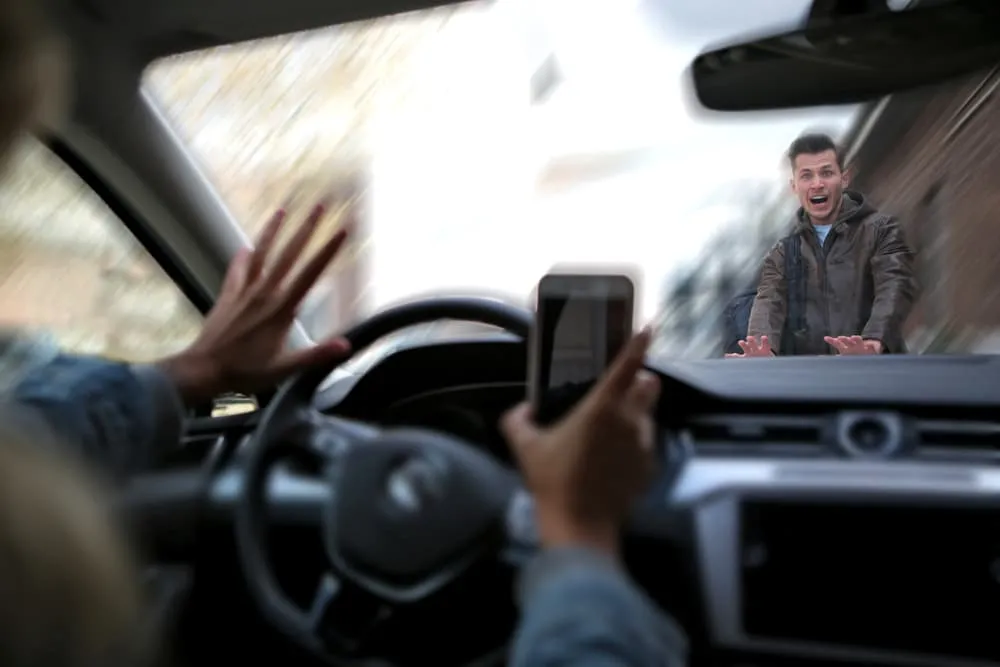
Behaviors that clearly breach the duty of care include texting, wearing headphones while driving, speeding, ignoring traffic signals, and committing a hit and run.
What Are the Legal Consequences of Driver Negligence?
Pedestrian accidents caused by driver negligence often result in serious injuries — broken bones, spinal cord damage, and traumatic brain injuries are common given how unprotected pedestrians are compared to vehicle occupants.
Drivers who breach their duty of care can face claims for medical expenses, lost income, pain and suffering, and other damages. These consequences underscore why the law takes a driver’s responsibility so seriously.
What Happens When a Pedestrian Shares Fault?
Even careful pedestrians can find themselves in dangerous situations. While drivers carry the primary burden of responsibility, pedestrians also have legal obligations that, if ignored, can affect their claim.
What Are a Pedestrian’s Responsibilities on the Road?
Pedestrians must cross at marked crosswalks, obey pedestrian traffic signals, and remain alert to their surroundings. Walking while distracted, crossing against signals, or entering the road unexpectedly are behaviors that can contribute to an accident.
How Is Shared Fault Determined After a Pedestrian Accident?
Shared fault occurs when both the pedestrian and driver failed to fully meet their responsibilities. If a pedestrian is hit while jaywalking, for example, both the pedestrian’s action and the driver’s inattentiveness may contribute to the incident.
Determining the degree of fault is a complex process involving analysis of all available evidence — traffic camera footage, witness statements, and accident reconstruction can all play a role in your personal injury claim.
In these situations, having a pedestrian accident attorney is essential. They can explain how shared fault rules apply specifically to your case, and work to ensure your portion of fault isn’t overstated by the opposing party.
How Can a Pedestrian Accident Attorney Help Your Case?
Injured pedestrians need legal counsel to make sure their rights are fully protected and their claim is fairly evaluated. A personal injury attorney will dig into the details of your accident, gather evidence, and build a case that demonstrates the driver’s failure to meet their duty of care.
Wondering if you need legal help at all? Start by reading about whether you need a pedestrian accident attorney and whether a pedestrian can sue if hit by a car in Wisconsin.
If you’ve been injured, reach out to a legal professional to:
- Evaluate your case and advise on the best course of action
- Gather and preserve critical evidence before it disappears
- Handle insurance negotiations on your behalf
- Work to secure compensation that reflects the true cost of your injuries
What Types of Evidence Matter Most in a Pedestrian Accident Case?
- Surveillance Footage. Video from traffic cameras or nearby businesses can capture the accident and clearly show the actions of both parties.
- Eyewitness Testimony. Statements from witnesses provide objective perspectives on what happened.
- Police Reports. The responding officer’s report contains vital accident details and often includes a preliminary fault assessment.
- Medical Records. Documentation of your injuries illustrates the severity of the accident and its impact on your health and life.
- Expert Testimony. Accident reconstruction experts can analyze speed, visibility, and other dynamics to determine how the accident unfolded.
Evidence must be collected quickly — skid marks fade, surveillance footage gets overwritten, and memories become less reliable over time. A pedestrian accident attorney knows how to move fast to secure this evidence before it’s gone. Learn more about what to expect when it comes to how long it takes to settle a pedestrian accident case.
What Role Does Insurance Play in Pedestrian Accident Claims?
Insurance coverage is central to compensating pedestrian accident victims. Understanding how insurers approach these claims prepares you for the challenges ahead.
How Do You Navigate Insurance Policies After a Pedestrian Accident?
After an accident, the driver’s auto insurance policy is typically the first source of compensation. Most policies cover bodily injuries to pedestrians caused by the policyholder’s negligence. However, the extent of coverage and an insurer’s willingness to pay can vary significantly.
Pedestrians may also turn to their own insurance — such as health insurance for medical costs, or uninsured/underinsured motorist coverage if the at-fault driver lacks sufficient coverage.
How Do Insurance Adjusters Handle Pedestrian Accident Claims?
Insurance adjusters scrutinize every detail, from the accident report to your medical records. They often attempt to minimize the company’s payout — which can include questioning the severity of your injuries or arguing that you were more at fault than you actually were.
Early settlement offers may be tempting, but they rarely cover the long-term costs associated with a serious pedestrian injury.
Why Do You Need an Attorney When Dealing with Insurance Companies?
You need a pedestrian accident lawyer when dealing with insurance companies. They can handle negotiations, make sure you aren’t pressured into accepting an unfair settlement, and calculate the true cost of the accident — including current and future medical expenses, lost wages, and other damages.
If the case proceeds to litigation, your attorney will advocate on your behalf in court, fighting for a judgment that reflects the full value of your claim. Always speak with a lawyer before engaging with any insurance company after a pedestrian accident.
Contact a Wisconsin Pedestrian Accident Attorney Today

Pedestrian accidents can have life-altering consequences. Trying to navigate a claim — especially one involving shared fault — on your own is a significant challenge when you should be focused on healing.
Wisconsin’s comparative fault laws are nuanced, and insurance companies will use every tool available to reduce what they owe you. A knowledgeable pedestrian accident attorney at Pemberton Personal Injury Law Firm can offer clarity, build a sound legal strategy, and tirelessly advocate for the compensation you deserve.
If you were injured by a negligent driver, reach out to Pemberton Personal Injury Law Firm today. Call (608) 448-6242 for a free consultation or contact a Wisconsin personal injury attorney online.