Legally Reviewed by William Pemberton on September 29, 2026
If you ride a motorcycle in Wisconsin, understanding the state’s helmet law isn’t just a formality — it can directly affect your safety and your ability to recover compensation if you’re ever injured in a crash. Wisconsin follows a partial helmet law, meaning helmet requirements depend on your age and licensing status, not a universal rule.
Pemberton Personal Injury Law Firm represents injured motorcyclists across Wisconsin, including in Madison, Baraboo, and Eau Claire. Below, we break down exactly what the law requires, what happens to your claim if you weren’t wearing a helmet, and what steps to take after a motorcycle accident in Wisconsin.
Does Wisconsin Require Motorcyclists to Wear Helmets?
Wisconsin does not have a universal helmet law. Under Wisconsin Statute 347.485, helmet use is mandatory only for specific groups of riders. Once you turn 18 and hold a full motorcycle license, wearing a helmet becomes your personal choice — though it’s one the state strongly recommends you make.
Who Is Required to Wear a Helmet in Wisconsin?
The following riders and passengers must wear a helmet under Wisconsin law:
- Riders and passengers under the age of 18 — no exceptions.
- Riders operating on an instructional permit — regardless of age, permit holders must wear helmets, as must any passenger riding with them.
- Adult operators carrying a passenger under 18 — even if the adult is fully licensed and over 18, it is illegal to carry an underage passenger who isn’t wearing a helmet.
Helmet Requirements: What Counts as a Legal Helmet?
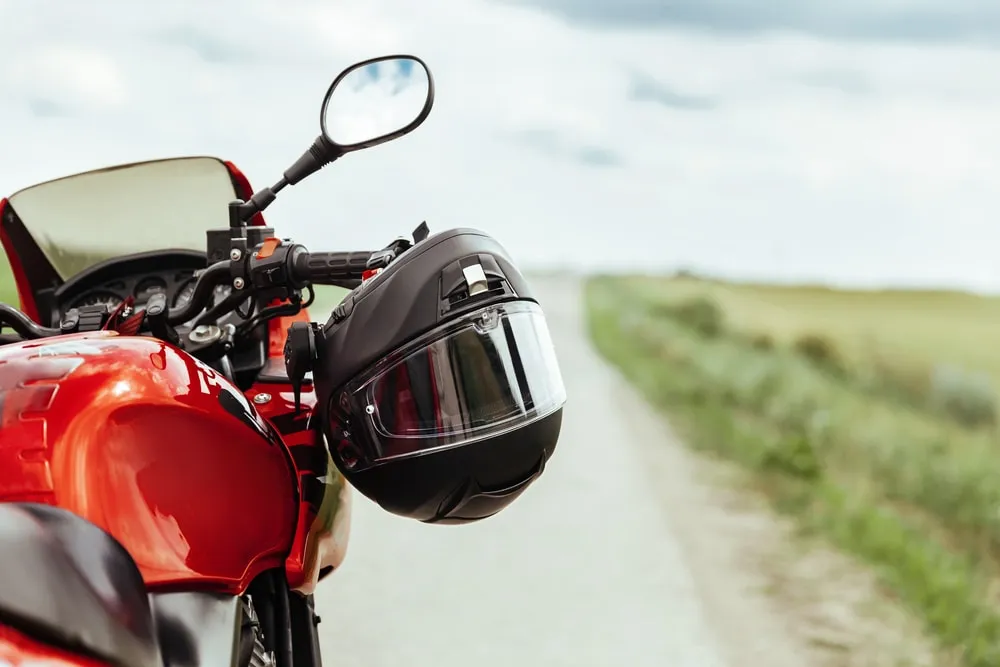
Any helmet worn under Wisconsin’s mandatory helmet law must display the DOT (Department of Transportation) symbol, confirming it meets Federal Motor Vehicle Safety Standard 218. Novelty helmets — which often lack adequate padding, chin straps, and impact protection — do not meet this standard and are not acceptable under the law. When required, only a properly fitted, DOT-approved helmet satisfies your legal obligation.
Eye Protection Requirements for Wisconsin Motorcyclists
Wisconsin law requires all motorcycle operators — regardless of age or license status — to wear eye protection while riding. Statute 347.485 specifies that acceptable eye protection includes:
- A protective face shield attached to a helmet
- Safety goggles
- Shatter-resistant glasses or sunglasses
Two exceptions apply. Riders operating an autocycle with a windshield, or a motorcycle with a windshield that rises at least 15 inches above the handlebars, are not required to wear separate eye protection. For all other riders, this requirement applies every time you get on the bike.
Fines for Violating Wisconsin Motorcycle Helmet Laws
Failing to comply with Wisconsin’s helmet law when you are legally required to do so carries financial penalties. Under Wisconsin Statute 347.50, violations can result in a fine ranging from $10 to $200 per incident. Operators who carry passengers under 18 without helmets also face demerit points on their driving record. The fines are relatively modest — but the legal and medical consequences of riding without a helmet in an accident are not.
How Not Wearing a Helmet Affects Your Personal Injury Claim in Wisconsin
One of the most common questions we hear from injured motorcycle riders is: “Can I still get compensation if I wasn’t wearing a helmet?” The answer is yes — in most cases. Wisconsin’s modified comparative negligence law under Wis. Stat. § 895.045 allows injured riders to recover damages even when they share some fault, as long as they are less than 51% responsible for their injuries.
For adult riders over 18 who are not legally required to wear a helmet, insurance companies may still argue that helmet nonuse contributed to the severity of a head injury — and use that argument to reduce your compensation. This is why legal representation matters. An experienced Wisconsin motorcycle accident attorney can push back against insurer bias and fight for a fair recovery.
Riders who were legally required to wear a helmet but chose not to face a harder road. If you were under 18 or riding on a permit and suffered a head injury in an accident, a court could find that your failure to wear a required helmet contributed to your damages, reducing what you can recover.
Injured in a Wisconsin Motorcycle Accident?
You May Still Have a Claim — Even Without a Helmet
Pemberton Personal Injury works on contingency. You pay nothing unless we recover for you.
|
1
Free Case Review
|
2
We Investigate the Crash
|
3
We Fight the Insurer
|
4
You Get What You’re Owed
|
What to Do After a Motorcycle Accident in Wisconsin
Whether you were wearing a helmet or not at the time of your crash, the steps you take immediately afterward will shape your ability to recover compensation. Here’s what to do:
- Move to safety if possible. Get yourself and any passengers out of traffic if you can do so without making injuries worse.
- Call 911. Wisconsin law requires you to report any accident involving injury, death, or property damage exceeding $1,000. A police report creates an official record that becomes critical evidence.
- Seek medical attention immediately. Even if you feel fine, head and spinal injuries can have delayed symptoms. Prompt diagnosis protects both your health and your legal claim.
- Document the scene. Photograph all vehicles, road conditions, skid marks, your helmet (if worn), and any visible injuries.
- Avoid admitting fault. Even an apology can be used against you. Stick to the facts when speaking with the other driver, witnesses, or police.
- Contact a Wisconsin motorcycle accident attorney. Insurers will move quickly to minimize your claim. Having legal representation from the start ensures your rights are protected.
Why Helmets Matter Even When the Law Doesn’t Require Them
The evidence on helmet effectiveness is clear. The Centers for Disease Control and Prevention estimates that motorcycle helmets save more than 1,800 lives nationally each year. Wisconsin has historically ranked among the more dangerous states for motorcyclists — the Wisconsin Department of Transportation has reported that motorcycles account for roughly 15% of all traffic fatalities despite representing a small fraction of registered vehicles.
Beyond the safety benefit, wearing a DOT-approved helmet when you’re not legally required to can also strengthen your personal injury claim by removing one of the most common arguments insurers use to reduce your compensation. Pemberton Personal Injury strongly recommends helmet use every time you ride — not because the law demands it, but because the consequences of not wearing one can be permanent.
Frequently Asked Questions About Wisconsin Motorcycle Helmet Laws
Can I get compensation for a motorcycle accident in Wisconsin if I wasn’t wearing a helmet?
Yes, in most cases. Wisconsin’s modified comparative negligence law allows injured riders to recover damages even if they were partially at fault — including for not wearing a helmet — as long as their share of fault is less than 51%. Adult riders over 18 are not required by law to wear a helmet, so helmet nonuse generally does not bar recovery. However, insurers may argue it worsened your injuries, which is why legal representation matters.
Does Wisconsin require all motorcyclists to wear helmets?
No. Wisconsin follows a partial helmet law. Helmets are required for riders and passengers under 18, and for any rider operating on an instructional permit. Adult riders over 18 with a full motorcycle license are not legally required to wear a helmet, though the state strongly recommends it.
Is eye protection required for motorcycle riders in Wisconsin?
Yes. All motorcycle operators in Wisconsin must wear eye protection — including face shields, goggles, or shatter-resistant glasses — regardless of age or helmet use. Exceptions apply if your motorcycle has a windshield that extends at least 15 inches above the handlebars.
What is the fine for not wearing a helmet in Wisconsin when one is required?
Fines range from $10 to $200 per violation under Wisconsin Statute 347.50. Riders who carry passengers under 18 without helmets also face demerit points on their driving record.
How does not wearing a helmet affect my personal injury claim in Wisconsin?
For adult riders who aren’t legally required to wear a helmet, nonuse typically does not prevent you from filing a claim. However, if you suffered a head injury, the at-fault driver’s insurer may argue that your injuries were more severe because you weren’t wearing a helmet and seek to reduce your payout. An experienced attorney can counter this argument by focusing the case on the other party’s negligence.
If you or a loved one was injured in a Wisconsin motorcycle accident, Pemberton Personal Injury Law Firm is ready to help. We serve clients across Wisconsin, including in Madison, Baraboo, Eau Claire, and surrounding communities. Our consultations are always free, and we only get paid when you do. Contact us today to discuss your case.
ABOUT THE ATTORNEY
William Pemberton
Personal Injury Attorney, Pemberton Personal Injury Law Firm
William Pemberton is the founding attorney of Pemberton Personal Injury Law Firm, representing injured Wisconsinites across Madison, Eau Claire, Baraboo, Fitchburg, and Sun Prairie. He handles car accidents, motorcycle accidents, dog bites, brain injuries, and wrongful death cases on a contingency fee basis.