
Legally Reviewed by William Pemberton on September 29, 2026
Burn injuries are some of the most painful and life-altering injuries a person can experience. They can happen in an instant, but the recovery can stretch on for months or even years, involving surgeries, skin grafts, and ongoing therapy. When someone else’s carelessness caused the accident, it’s worth understanding which types of burns may qualify for a legal claim and what compensation may be available.
That’s where Pemberton Personal Injury Law Firm comes in. With over 80 years of combined experience handling serious injury cases throughout Wisconsin, we know how to build a strong case and fight for what our clients truly deserve. We work on a contingency fee basis, meaning you pay nothing unless we win.
What Are the Different Types of Burn Injuries?
Burn injuries are classified by severity, and the degree of the burn plays a major role in how a case is valued.
First-Degree Burns
First-degree burns only affect the outer layer of skin. They cause redness and minor swelling but typically heal within a week or so. While these burns are rarely the focus of a personal injury claim on their own, they can be part of a larger injury.
Second-Degree Burns
Second-degree burns go deeper, damaging the second layer of skin. These injuries blister, are intensely painful, and can leave permanent scarring. They often require medical treatment and sometimes skin grafts, making them a more significant factor in a claim.
Third and Fourth-Degree Burns
Third-degree burns destroy all layers of skin and may damage nerves, which can actually reduce sensation in the affected area. Fourth-degree burns go even further, reaching muscle and bone. Both are catastrophic injuries that require extensive hospitalization, surgery, and long-term care.
How Do Burn Injuries Happen?
Burns can result from many different types of accidents, and some involve someone else’s negligence. Common causes include fires and explosions, chemical exposure, electrical hazards, scalding from hot liquids, and defective products.
Burns frequently happen in workplace settings, particularly in industries like manufacturing, construction, and food service. When a burn occurs on the job because of unsafe conditions, it may support both a work injury claim and a separate personal injury claim.
What Compensation Can Burn Injury Victims Pursue?
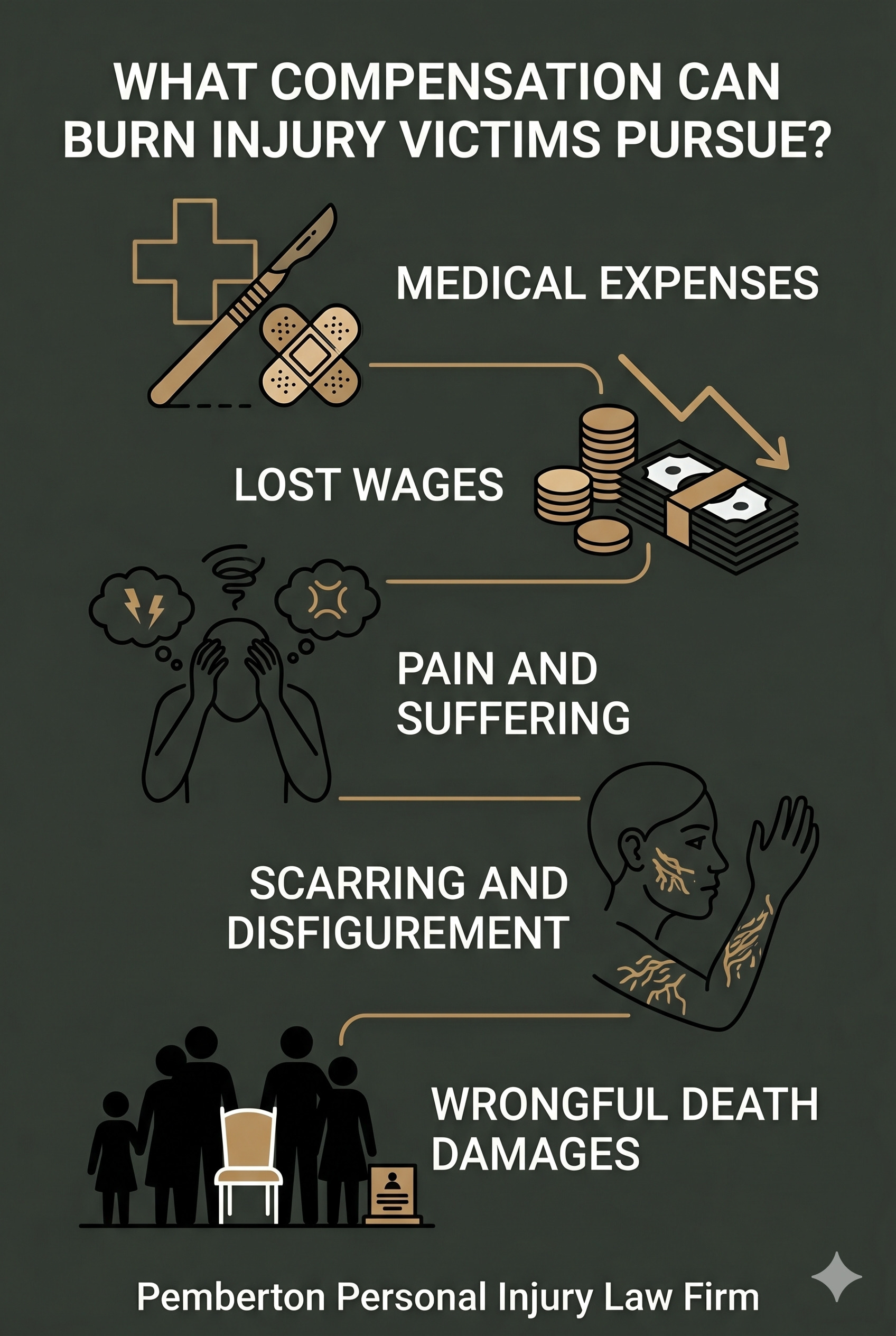
The financial impact of a serious burn injury can be enormous. Medical bills add up quickly, and many survivors face a long road of follow-up procedures, physical therapy, and mental health support. The following types of compensation may be available in a burn injury claim:
- Medical expenses: Costs for emergency treatment, hospital stays, surgeries, skin grafts, and ongoing care
- Lost wages: Income lost while recovering, as well as future earning capacity if the injuries affect the ability to work long-term
- Pain and suffering: Compensation for the physical pain and emotional toll the injury has caused
- Scarring and disfigurement: Burns often leave visible scars that have their own significant impact on quality of life
- Wrongful death damages: If you lost a loved one from burn injuries, surviving family members may be able to pursue a wrongful death claim in Wisconsin
Every case is different, and the value of a claim depends on the severity of the injuries, the circumstances of the accident, and the evidence available.
How Long Do You Have to File a Burn Injury Claim in Wisconsin?
Timing matters in any Wisconsin burn injury case. Typically, a lawsuit must be filed within 3 years from the date of the accident, and this time period generally applies to burn injury claims under Wisconsin law. However, there are important exceptions, and specific details of your claim may affect the applicable deadline, so speaking with an attorney early is always a good idea.
Schedule a Free Case Evaluation With a Wisconsin Burn Injury Lawyer Today
A burn injury can change every part of your life, from your physical health to your ability to work and care for your family. You deserve an attorney who takes that seriously and will work hard to hold the responsible party accountable.
Pemberton Personal Injury has spent decades standing up for people across Wisconsin who have been hurt through no fault of their own. If you or someone you love suffered a burn injury due to someone else’s negligence, contact us today to schedule a free case evaluation.
Frequently Asked Questions About Burn Injury Claims in Wisconsin
Can I file a burn injury claim if the accident happened at work?
Yes, in many cases. A workplace burn injury may support a workers’ compensation claim, a third-party personal injury claim, or both. Workers’ compensation covers medical expenses and a portion of lost wages regardless of fault, but it does not cover pain and suffering. If a third party such as an equipment manufacturer or a negligent contractor caused or contributed to the burn, a separate personal injury claim may allow you to recover additional damages. An attorney can help you evaluate all available options.
Yes, in many cases. A workplace burn injury may support a workers’ compensation claim, a third-party personal injury claim, or both. Workers’ compensation covers medical expenses and a portion of lost wages regardless of fault, but it does not cover pain and suffering. If a third party such as an equipment manufacturer or a negligent contractor caused or contributed to the burn, a separate personal injury claim may allow you to recover additional damages. An attorney can help you evaluate all available options.
What is the statute of limitations for a burn injury claim in Wisconsin?
Wisconsin generally gives burn injury victims three years from the date of the accident to file a personal injury lawsuit. If the claim involves a government entity, the deadline may be shorter and require a notice of claim within a specific period. Because these deadlines can vary based on the facts of the case, contacting an attorney promptly after a burn injury helps ensure your rights are protected.
Wisconsin generally gives burn injury victims three years from the date of the accident to file a personal injury lawsuit. If the claim involves a government entity, the deadline may be shorter and require a notice of claim within a specific period. Because these deadlines can vary based on the facts of the case, contacting an attorney promptly after a burn injury helps ensure your rights are protected.
How is pain and suffering calculated in a burn injury case?
Pain and suffering in a burn injury case is not calculated using a fixed formula. Factors that influence its value include the severity and extent of the burns, the duration and intensity of pain during recovery, the number and type of procedures required, the presence of permanent scarring or disfigurement, and the emotional impact of the injury on daily life and relationships. Attorneys and insurance adjusters typically use a multiplier applied to economic damages, or a per diem approach that assigns a daily value to pain during recovery.
Pain and suffering in a burn injury case is not calculated using a fixed formula. Factors that influence its value include the severity and extent of the burns, the duration and intensity of pain during recovery, the number and type of procedures required, the presence of permanent scarring or disfigurement, and the emotional impact of the injury on daily life and relationships. Attorneys and insurance adjusters typically use a multiplier applied to economic damages, or a per diem approach that assigns a daily value to pain during recovery.
What if my burn injuries required skin graft surgery?
Skin graft surgery significantly increases the value of a burn injury claim. It reflects the severity of the injury, adds substantial medical costs, typically requires extended recovery time, and often results in permanent scarring at both the injury site and the donor site. All of these costs and consequences are compensable in a Wisconsin personal injury claim. Documenting every procedure, recovery visit, and associated expense is important to recovering the full value of what the surgery costs you.
Skin graft surgery significantly increases the value of a burn injury claim. It reflects the severity of the injury, adds substantial medical costs, typically requires extended recovery time, and often results in permanent scarring at both the injury site and the donor site. All of these costs and consequences are compensable in a Wisconsin personal injury claim. Documenting every procedure, recovery visit, and associated expense is important to recovering the full value of what the surgery costs you.
Can family members file a claim if a loved one died from burn injuries?
Yes. In Wisconsin, certain family members may be able to file a wrongful death claim when someone dies as a result of burn injuries caused by another party’s negligence. Eligible claimants typically include spouses and children, and in some cases parents or siblings depending on the circumstances. A wrongful death claim may allow recovery for funeral and burial expenses, lost financial support, and the loss of society and companionship. Wisconsin’s wrongful death statute has its own deadlines, so contacting an attorney promptly is important.
Yes. In Wisconsin, certain family members may be able to file a wrongful death claim when someone dies as a result of burn injuries caused by another party’s negligence. Eligible claimants typically include spouses and children, and in some cases parents or siblings depending on the circumstances. A wrongful death claim may allow recovery for funeral and burial expenses, lost financial support, and the loss of society and companionship. Wisconsin’s wrongful death statute has its own deadlines, so contacting an attorney promptly is important.
ABOUT THE ATTORNEY
William Pemberton
Personal Injury Attorney, Pemberton Personal Injury Law Firm
William Pemberton is the founding attorney of Pemberton Personal Injury Law Firm, representing injured Wisconsinites across Madison, Eau Claire, Baraboo, Fitchburg, and Sun Prairie. He handles car accidents, motorcycle accidents, dog bites, brain injuries, and wrongful death cases on a contingency fee basis.