Legally Reviewed by William Pemberton on September 25, 2026
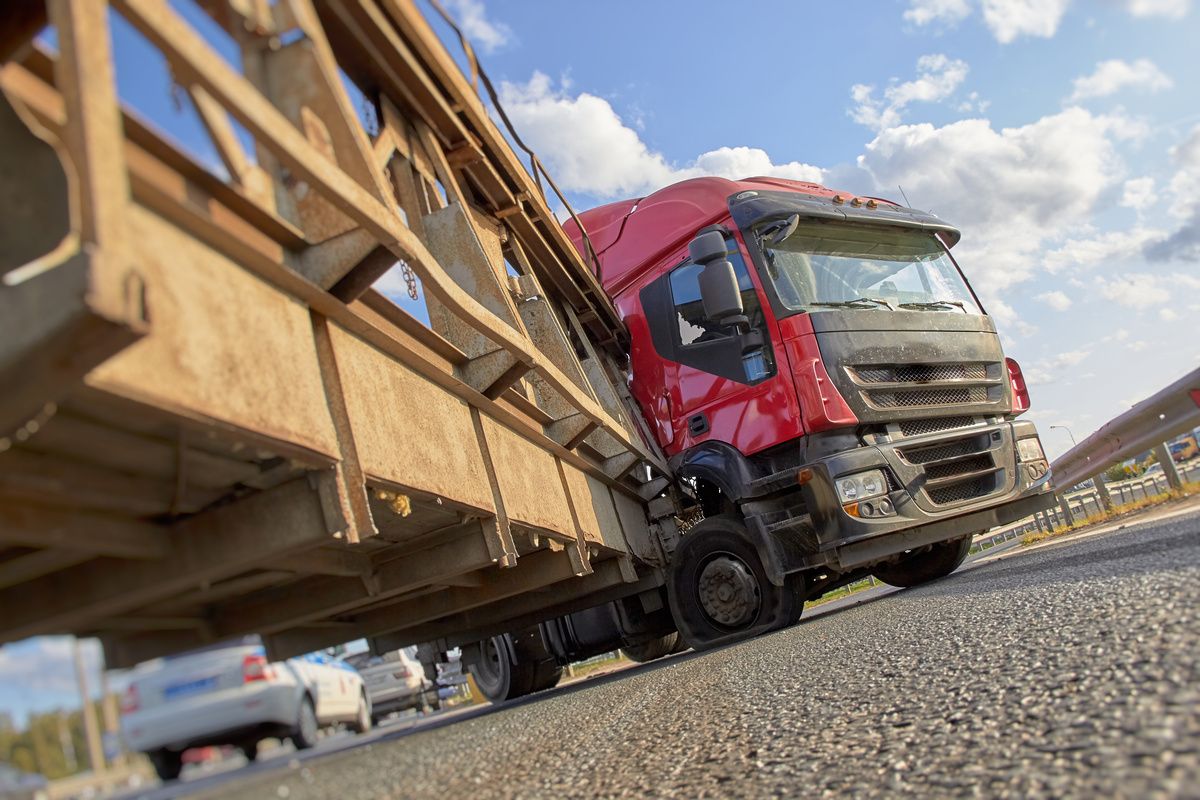
A jackknife truck accident happens when a semi-truck or tractor-trailer folds in on itself. The trailer swings out from behind the cab, forming a sharp angle that looks like a folding pocket knife. This kind of crash happens fast. When it does, the trailer can sweep across multiple lanes of traffic with little warning and potentially massive devastation. Other drivers have almost no time to react.
So who is responsible? It depends on how the crash happened, but responsibility can fall on the truck driver, the trucking company, a maintenance provider, or the company that loaded the cargo.
When a loaded semi-truck loses control and folds across the road, the results can be devastating. Pemberton Personal Injury Law Firm helps people across Wisconsin who have been seriously hurt in truck accidents, including jackknife crashes. Our Wisconsin truck accident lawyers know how these cases work and what it takes to identify the responsible parties.
What Causes a Jackknife Truck Accident?
Jackknife crashes are often caused by a problem with the truck’s braking, speed, or control. When the trailer does not slow down as fast as the cab, the trailer can swing wide and cause the truck to fold.
Common causes of jackknife truck accidents include:
- Sudden or hard braking on wet, icy, or slick roads
- Speeding or driving too fast for road conditions
- Equipment failure, including worn brakes or uneven brake systems
- Improperly loaded or unevenly distributed cargo
- Driver fatigue or distracted driving
These are not always random bad luck. According to the FMCSA’s Large Truck and Bus Crash Facts 2021, jackknifing was recorded for 142 large trucks involved in fatal crashes in 2021. Many of these crashes involve decisions, road conditions, or safety issues that may have been preventable.
Who Can Be Held Liable for a Jackknife Truck Accident?

Liability in a jackknife truck accident is not always simple. More than one party may share responsibility depending on how the crash happened.
The Truck Driver
Driver error is the most common cause of jackknife accidents. If the driver was speeding, braking too hard, distracted, or fatigued, they may be responsible. Truck drivers have a duty to adjust their driving based on road conditions and traffic.
The Trucking Company
Trucking companies may also be responsible when their drivers cause harm. Under Wisconsin law, a company may be liable for the negligent actions of its employees when those actions happen on the job. If the company failed to properly train the driver, pushed unsafe delivery schedules, or skipped required safety checks, it may also be responsible. Trucking companies that violate FMCSA safety rules may face legal consequences in addition to civil claims.
Maintenance Companies and Equipment Providers
Brake failure and mechanical defects can contribute to jackknife accidents. If a third-party maintenance company failed to inspect or properly repair the truck, they may share liability. The same may apply if a defective part was sold or installed that contributed to the loss of control.
Cargo Loaders
Improperly loaded trailers can increase the risk of a jackknife crash. If cargo was packed unevenly or exceeded weight limits, the company responsible for loading the trailer may be held liable if that imbalance caused the crash. Understanding who is liable for a truck accident often requires a thorough investigation into every company involved.
How Do You Prove Liability After a Jackknife Truck Crash?
Proving fault in a jackknife truck accident takes more than showing that the truck folded across the road. Evidence disappears quickly after a crash, and trucking companies often move fast to protect themselves.
Building a strong case often means gathering police reports, witness statements, and photos from the scene. It may also mean obtaining the truck’s black box data, which can record speed, braking, and driver input in the moments before the crash. Driver logs, maintenance records, cargo loading records, and the trucking company’s internal communications can all become important pieces of evidence.
Why Does Having a Truck Accident Lawyer Matter?
Jackknife truck accident cases often involve well-funded trucking companies and insurance carriers. Trucking companies often carry large commercial insurance policies and have legal teams working to limit payouts. Going up against that system without representation can put you at a serious disadvantage.
A lawyer who handles truck accident cases knows what to do after a truck accident and can act quickly to preserve the evidence that matters most. Your lawyer can handle communications with the insurance company, identify every responsible party, and build a case around the full scope of your losses, not just your immediate medical costs. Having the right legal support can make a real difference in the outcome of your case.
Contact Our Wisconsin Jackknife Truck Accident Lawyers Today
After a jackknife truck accident, injuries can be serious, insurance claims can be complex, and trucking companies may have legal teams ready from day one. Pemberton Personal Injury Law Firm is ready for cases like these. Our team brings extensive combined experience to personal injury cases across Wisconsin, and we fight for fair compensation for every client we serve.
If you have been hurt in a jackknife truck accident, do not wait to get answers. The Pemberton Promise is our commitment to you: honest guidance, dedicated representation, and no shortcuts. Reach out to our team today to schedule your free case evaluation.
Frequently Asked Questions: Jackknife Truck Accidents in Wisconsin
How is a jackknife truck accident different from a regular truck accident?
A jackknife truck accident is a specific type of large truck crash where the trailer swings outward from the cab, folding the truck into a shape like a pocket knife. Unlike a standard rear-end collision or side-swipe involving a truck, a jackknife creates a lateral sweeping motion across the roadway that can affect multiple lanes simultaneously. This makes jackknife crashes especially dangerous for other drivers who may have no way to avoid the trailer as it swings across the road. The physics of a jackknife also differ from a typical truck crash, often involving brake failure, load imbalance, or loss of traction rather than simple driver inattention alone.
What evidence is most important in a jackknife truck accident case?
The black box data from the truck, formally called the Electronic Control Module (ECM), is often the most critical piece of evidence in a jackknife case. It captures speed, braking force, throttle position, and other inputs in the seconds before the crash. Driver logs can reveal whether Hours of Service rules were violated, indicating fatigue. Maintenance records show whether brake systems were properly inspected and repaired. Cargo loading records can establish whether the trailer was loaded correctly. This evidence must be preserved quickly because trucking companies are not required to keep it indefinitely, and some data can be overwritten within days of the crash.
Can bad weather reduce the trucking company’s liability in a jackknife crash?
Weather conditions like ice, snow, or heavy rain are common factors in jackknife crashes, but they do not automatically eliminate or reduce the trucking company’s liability. Truck drivers are trained and required to adjust their speed and driving behavior based on road conditions. A driver who travels at highway speeds on icy roads, or who applies sudden hard braking on a slick surface, may still be found negligent even if the weather contributed to the crash. Trucking companies are also responsible for ensuring drivers are trained to handle hazardous conditions. Weather is often used as a defense strategy, which is why preserving evidence about driver behavior before and during the crash is so important.
How long do I have to file a claim after a jackknife truck accident in Wisconsin?
In Wisconsin, the statute of limitations for most personal injury claims is three years from the date of the accident. This means you generally have three years to file a lawsuit against the at-fault parties. However, waiting too long can cause serious problems even within that window. Evidence degrades, witnesses become harder to locate, and trucking companies may argue that delays reflect a less serious injury. If a government entity is involved, different deadlines may apply. Consulting with a Wisconsin truck accident attorney as soon as possible after a crash helps ensure that evidence is preserved and your legal rights are protected from the very start.
What types of compensation may be available after a jackknife truck accident injury?
Compensation available after a jackknife truck accident can include both economic and non-economic damages. Economic damages cover measurable financial losses such as medical bills, future medical treatment, lost wages, and loss of earning capacity if the injury affects your ability to work. Non-economic damages cover the human impact of the injury, including pain and suffering, emotional distress, loss of enjoyment of life, and the effect of the injuries on personal relationships. In cases where the trucking company’s conduct was particularly reckless, punitive damages may also be available. The full value of a truck accident claim depends on the severity of the injuries, the extent of long-term impact, and the number of liable parties involved.
ABOUT THE ATTORNEY
William Pemberton
Personal Injury Attorney, Pemberton Personal Injury Law Firm
William Pemberton is the founding attorney of Pemberton Personal Injury Law Firm, representing injured Wisconsinites across Madison, Eau Claire, Baraboo, Fitchburg, and Sun Prairie. He handles car accidents, motorcycle accidents, dog bites, brain injuries, and wrongful death cases on a contingency fee basis.