
After a serious injury, one of the biggest decisions you may face is not just whether to settle your case, but how to receive your money. The choice between a structured settlement and a lump-sum payment can have a real impact on your financial future, so it is worth understanding what each option entails.
If you are navigating a personal injury claim in Wisconsin, Pemberton Personal Injury Law Firm can help you make sense of your options. With 80+ years of combined experience and a background in insurance defense, the team at Pemberton Personal Injury knows how these settlement decisions work and what questions to ask before you agree to anything.
What Is a Lump Sum Payment?
A lump sum payment is one single payment that covers the full value of your settlement. You receive all of the money at once, and the case is closed.
When Does a Lump Sum Make Sense?
A lump sum can be a good fit when you have pressing financial needs right after an injury, such as outstanding medical bills, lost wages, or other urgent debts. That said, it also comes with responsibility.
Once you have the money, it is up to you to manage it carefully so that it lasts. There is no guaranteed income stream, and if the funds run out, there is no going back.
What Is a Structured Settlement?
A structured settlement is an agreement where your compensation is paid out in regular installments over time instead of all at once. These payments are typically funded through an annuity purchased from a life insurance company.
How Are Structured Settlement Payments Set Up?
The payment schedule can be customized to fit your needs. Payments might be arranged monthly, annually, or in larger amounts at certain points in time, such as when you expect higher medical costs or when a child reaches college age.
One key advantage is stability. Because the payments are scheduled in advance, you have a predictable income stream for as long as the settlement runs.
Are Structured Settlements Tax-Free?
Tax treatment is one of the most important factors to consider. Under Internal Revenue Code Section 104(a)(2), personal injury settlements are generally excluded from gross income, whether received as a lump sum or through structured payments.
With a structured settlement, that tax-free status typically extends to the interest earned by the annuity over time. With a lump sum, if you invest the money, any gains you earn on that investment may be taxable. This is worth discussing with a financial advisor before you decide.
What Factors Should Influence Your Decision?
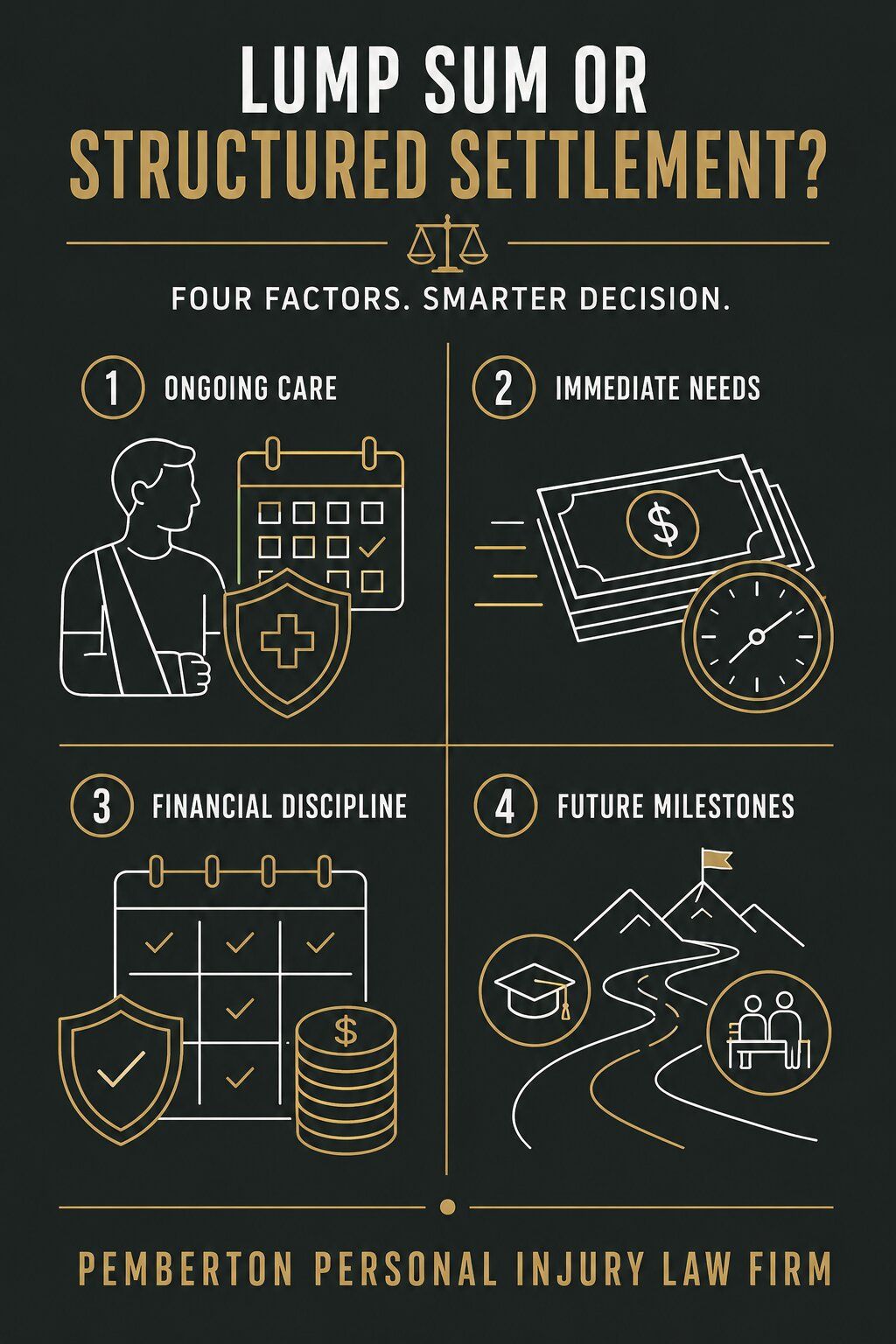
There is no single right answer, and the best choice depends on your individual situation. Understanding what your claim is worth is a good starting point before evaluating the payment structure.
Here are some factors that commonly shape this decision:
- Ongoing medical needs: If your injuries require long-term care or future procedures, structured payments can be timed to cover those costs as they come up.
- Immediate financial pressure: If you are facing urgent bills right now, having access to a larger sum upfront may be more practical.
- Financial management: If managing a large sum feels overwhelming, structured payments offer built-in discipline and a consistent income stream.
- Future life changes: Payments can sometimes be designed around major events, such as retirement or a child’s education costs.
Knowing how a personal injury lawsuit works can help you make a more informed choice when the time to settle arrives.
Can You Change Your Mind After Choosing a Structured Settlement?
Once a structured settlement is in place, it is generally not flexible. You cannot speed up the payments or change the terms on your own.
Some companies will offer to buy your future payments for a lump sum, but this usually comes at a steep discount and may not serve your long-term interests. This is why it is important to think through your decision carefully before finalizing a settlement.
Should You Accept the First Settlement Offer?
Before weighing lump sum vs. structured, make sure the offer itself is fair. Insurance companies often present an initial offer that falls short of what a case is actually worth.
Reviewing whether to accept a first settlement offer is an important step before the question of payment structure ever comes up. An experienced attorney can help evaluate the full value of your claim and negotiate a settlement that truly reflects your losses.
Schedule a Free Case Evaluation at Pemberton Personal Injury Law Firm
When the stakes are this high, you deserve guidance from attorneys who understand these decisions from every angle. Pemberton Personal Injury Law Firm has achieved a landmark jury verdict in a high-stakes personal injury case and has been recognized as a Super Lawyers firm for 14 consecutive years.
The dedicated team at Pemberton Personal Injury is here to help you make informed decisions at every stage of your case. Reach out today to request your free case evaluation.