
Legally Reviewed by William Pemberton on September 25, 2026
A traumatic brain injury can change your life overnight. The effects can range from headaches and memory problems to long-term disability, and no two injuries look exactly the same. When another person’s negligence caused your injury, you deserve to be compensated, but proving a TBI in a legal case takes more than a doctor’s word.
If you’ve been hurt in an accident and suspect you have a brain injury, knowing how to build your case from the start can make a real difference. Pemberton Personal Injury Law Firm has helped injured Wisconsinites fight for fair compensation for over 80 combined years. Our team understands the unique challenges that come with TBI cases, and we know what it takes to prove them.
Why Is It Hard to Prove a Traumatic Brain Injury?
Brain injuries are different from broken bones or cuts that show up clearly on an X-ray. A TBI affects how the brain functions, and that is not always visible on standard imaging tests.
Insurance companies know this. They often use the invisible nature of brain injuries to argue your symptoms are not as serious as you claim, or that something other than the accident caused them.
What Evidence Do You Need for a TBI Claim?
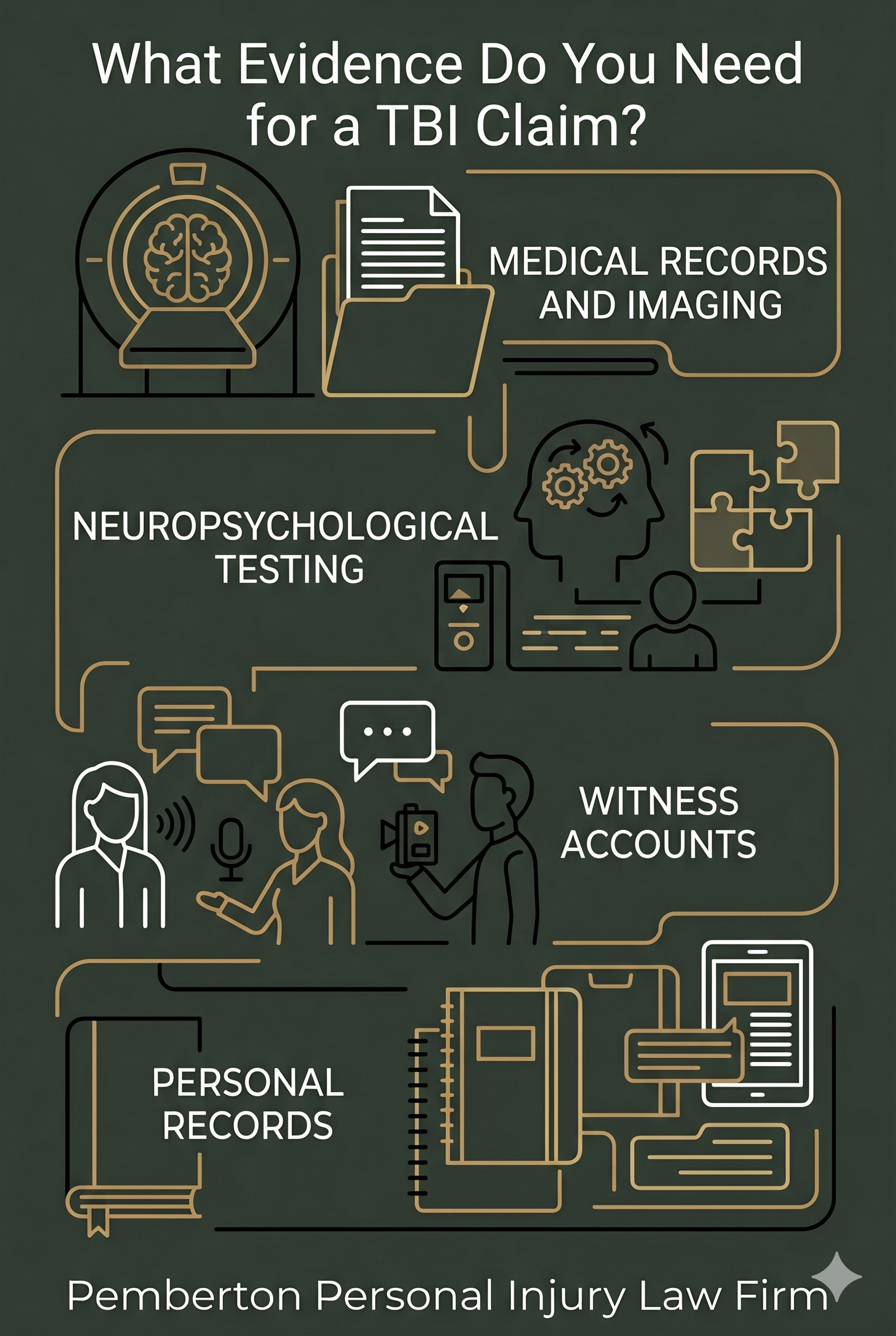
Strong evidence is the foundation of any successful brain injury claim. The right combination of documentation, testing, and witness accounts can tell a clear story about how your injury has affected your life. Here are the key types of evidence that matter most in a TBI case:
- Medical records and imaging: Emergency room notes, CT scans, MRI results, and specialist follow-ups are the most important pieces of evidence. Even when imaging comes back normal, records documenting your reported symptoms carry real weight.
- Neuropsychological testing: These tests measure memory, attention, and problem-solving to reveal deficits that do not show up on a brain scan.
- Witness accounts: Family members, coworkers, and close friends can describe changes they have noticed in your behavior, memory, and functioning since the injury.
- Personal records: A daily journal tracking your symptoms and how your life has changed creates a running record that supports your claim over time.
Building a strong TBI case takes time, and the sooner you start gathering this evidence, the better. It is critical to seek medical care right away after any head injury, because gaps in treatment give insurance companies a reason to minimize your claim.
How Do You Prove Liability After a Traumatic Brain Injury?
Before you can recover compensation, you need to show that someone else’s negligence caused your injury. Car accidents, falls, and truck crashes are among the most frequent causes in Wisconsin.
Once the cause is established, your attorney will connect the at-fault party’s actions directly to your injury. This requires linking the accident to your symptoms through medical records, expert testimony, and a clear timeline of your care.
What Compensation Can You Get for a Traumatic Brain Injury?
A TBI claim can account for both the financial and personal costs of your injury. Compensation may include:
- Past and future medical bills
- Lost wages
- Lost or reduced earning capacity
- Pain and suffering
- Emotional distress
- Long-term care costs if ongoing support is needed
The value of your case depends on the severity of your injury and how it has affected your life.
How Long Do You Have to File a TBI Lawsuit in Wisconsin?
Timing matters in any personal injury case. Typically, a lawsuit must be filed within 3 years from the date of the accident, and this time period generally applies to brain injury claims under Wisconsin law. However, there are important exceptions and nuances that can affect the applicable deadline, so it is worth speaking with an attorney as soon as possible to understand where your case stands.
If an insurance company has already contacted you, it is important to know what fighting the insurance company after a TBI really looks like. Early outreach from adjusters often means they are working to limit what they pay you.
Talk to a Wisconsin Traumatic Brain Injury Lawyer Today
Recovering from a traumatic brain injury is hard enough without having to fight for the money you are owed. You deserve an attorney who will build a strong case, push back on insurance companies, and put your best interests first every step of the way.
Pemberton Personal Injury Law Firm works on a contingency fee basis, meaning you pay nothing unless we win. If you have suffered a traumatic brain injury and want to understand your options, contact us today to schedule a free case evaluation.
Frequently Asked Questions: Proving a Traumatic Brain Injury Claim
Can you have a traumatic brain injury without losing consciousness?
Yes. Loss of consciousness is not required for a TBI diagnosis. Many people with traumatic brain injuries, including mild TBIs such as concussions, never lose consciousness at all. Symptoms such as confusion, disorientation, headache, memory gaps, and feeling dazed immediately after an accident can all indicate a TBI even when the injured person remained awake throughout. This is one of the reasons TBIs are commonly underdiagnosed, and it is also why insurance companies often dispute these claims. Seeking immediate medical evaluation after any head impact gives you documentation of your symptoms from the earliest possible point, which is critical in a legal case.
What happens when a brain scan comes back normal but TBI symptoms persist?
Standard imaging such as CT scans and MRIs often appear normal in mild to moderate TBI cases, even when the injury is real and disabling. This does not mean your injury is not serious — it means the injury has not caused visible structural damage detectable by those specific tools. Neuropsychological testing is frequently used in these situations to document functional deficits in memory, processing speed, and concentration that standard imaging cannot capture. Your physician’s clinical notes documenting your reported symptoms over time, combined with specialist evaluations and neuropsychological test results, form the foundation of your claim when imaging is inconclusive.
How is a traumatic brain injury diagnosed after an accident?
TBI diagnosis typically begins in the emergency room with a clinical evaluation that assesses your level of consciousness, orientation, and neurological function. Imaging such as CT scans and MRIs may be ordered to check for bleeding, swelling, or structural damage. For injuries where imaging is inconclusive, a neurologist or neuropsychologist may conduct more specialized assessments. These include cognitive testing, balance evaluations, and standardized neuropsychological batteries designed to measure the specific ways a brain injury affects function. Seeing a specialist promptly after any head injury is important both for your health and for building the medical record that supports a future legal claim.
Can a mild TBI or concussion support a personal injury claim in Wisconsin?
Yes. A mild TBI, including a concussion, can support a personal injury claim if the injury was caused by another person’s negligence. The term “mild” refers to the severity of the initial injury event, not the impact on your life. Many people with mild TBIs experience persistent symptoms including headaches, cognitive difficulties, sensitivity to light and sound, and mood changes that affect their ability to work and function for months or even years. The key is thorough documentation from a medical provider who has evaluated your specific symptoms and can connect them to the accident that caused them.
How long can symptoms from a traumatic brain injury last?
TBI symptoms vary widely depending on the severity and location of the injury. Many concussion symptoms resolve within weeks, but a significant portion of people experience post-concussion syndrome with symptoms lasting months or longer. Moderate to severe TBIs can result in permanent changes to cognition, memory, personality, and physical function. Because TBI symptoms can evolve over time and some deficits only become apparent months after the injury, it is important not to settle a personal injury claim before the full extent of your injury is known. Your attorney can advise you on timing and help ensure that future care costs are included in any settlement or judgment.
ABOUT THE ATTORNEY
William Pemberton
Personal Injury Attorney, Pemberton Personal Injury Law Firm
William Pemberton is the founding attorney of Pemberton Personal Injury Law Firm, representing injured Wisconsinites across Madison, Eau Claire, Baraboo, Fitchburg, and Sun Prairie. He handles car accidents, motorcycle accidents, dog bites, brain injuries, and wrongful death cases on a contingency fee basis.