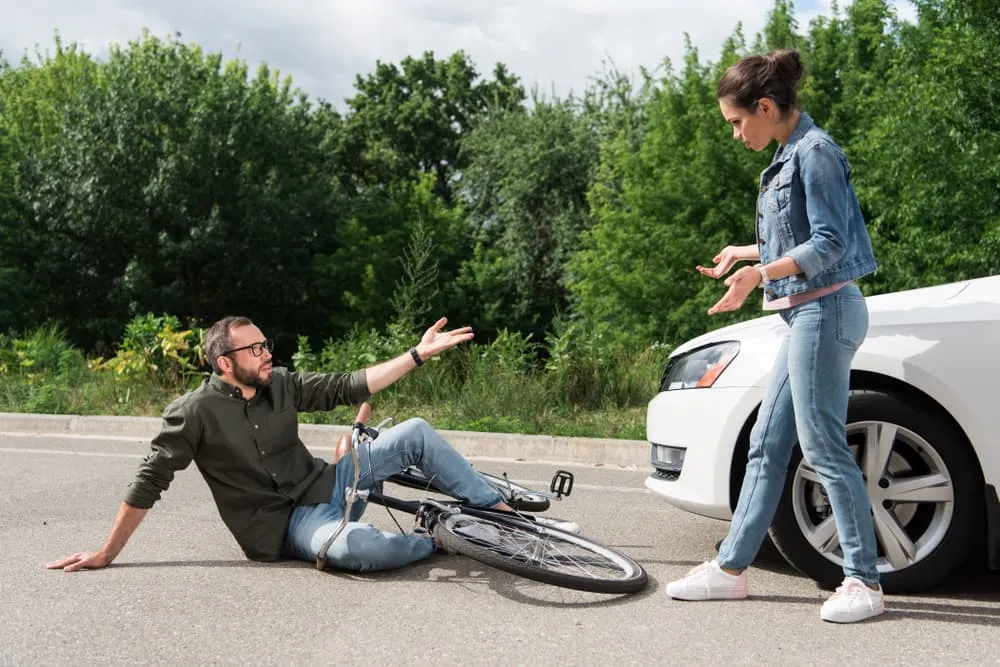
Wisconsin cyclists face real risks every time they ride. According to the Wisconsin DOT’s 2024 Bicycle Fact Sheet, 795 bicycle crashes were reported across the state, resulting in 8 deaths and 787 injuries — an average of one bicyclist killed or injured every 11 hours. When those crashes involve another driver’s negligence, injured cyclists and their families have the right to pursue compensation.
Understanding the most common types of bicycle accidents in Wisconsin — and who is typically at fault — is the first step to protecting your legal rights after a crash.
Key Takeaways:
- Wisconsin reported 795 bicycle crashes in 2024, with 8 fatalities and 787 injuries — one cyclist killed or injured every 11 hours.
- Motor vehicle collisions are the most legally significant bicycle accidents, with the driver typically at fault for failing to yield, turning unsafely, or not watching for cyclists.
- Dooring, intersection crashes, rear-end collisions, and right-hook turns are among the most common vehicle-bike accident types in Wisconsin.
- Wisconsin follows modified comparative fault — you can still recover as long as you are 50% or less responsible for the crash.
- A bicycle accident attorney can gather evidence, establish fault, negotiate with insurers, and fight for full compensation for your injuries.
Most Common Types of Bicycle Accidents in Wisconsin
Bicycle accidents occur in many different ways. Some involve motor vehicles; others involve road hazards or cyclist error. The type of accident determines who may be liable and what evidence your attorney will need to build your case.
1. Rear-End Collisions
Rear-end crashes — where a motor vehicle strikes a cyclist from behind — are among the most serious and most common vehicle-bike collisions in Wisconsin. They frequently occur when a driver is distracted, following too closely, or fails to notice a cyclist slowing or stopping ahead. Because cyclists have no protection from a rear impact, these crashes often result in severe injuries including traumatic brain injuries, spinal injuries, and fractures. The driver is almost always at fault in a rear-end bike crash.
2. Intersection Collisions
Intersections are the most dangerous locations for Wisconsin cyclists. According to the Wisconsin DOT, motorists failing to yield at controlled intersections is one of the leading causes of bicycle crashes statewide. These collisions happen when a driver runs a red light, fails to stop at a sign, or doesn’t see a cyclist legally crossing before proceeding. Cyclists can also be at fault in intersection crashes — by running stop signs or failing to yield — which is why fault determination is important in every case.
3. Right-Hook and Left-Cross Turns
Turning crashes are a leading cause of serious bicycle injuries. A right-hook collision occurs when a driver passes a cyclist and then turns right across their path, cutting off the bicycle. A left-cross collision occurs when an oncoming driver turns left across the path of a cyclist traveling straight through an intersection. Both scenarios typically result from the driver failing to see or yield to the cyclist. These are preventable crashes that reflect driver negligence, and the driver is typically at fault.
4. Dooring Accidents
Dooring accidents occur when the occupant of a parked vehicle opens a car door directly into the path of an oncoming cyclist. These crashes are especially common in urban areas like Madison where cyclists ride in bike lanes adjacent to on-street parking. A cyclist has virtually no time to react when a door opens suddenly at close range. Under Wisconsin law, the person who opens a vehicle door is required to check for approaching traffic before doing so; failing to do so constitutes negligence. The vehicle occupant — not the cyclist — is typically liable.
5. Bike vs. Motor Vehicle: Distracted and Impaired Drivers
Any crash in which a negligent driver collides with a cyclist can give rise to a personal injury claim. Distracted drivers — who are texting, using a phone, or otherwise not paying attention — frequently fail to notice cyclists sharing the road. Distracted driving claims thousands of lives per year nationally and poses significant danger to cyclists who have no protective enclosure. Impaired drivers similarly fail to maintain lane position, react appropriately to cyclists, or observe traffic controls. When impairment or distraction is a factor, it strengthens the case against the driver and may support additional punitive damages claims in egregious situations.
6. Bike Lane Violations
Bike lanes exist to create a protected space for cyclists separated from motor vehicle traffic. When drivers enter, block, or park in bike lanes, they force cyclists into the travel lane or into evasive maneuvers that can cause crashes. A driver who encroaches on a designated bike lane and causes a collision is liable for that violation. Parked delivery vehicles, construction equipment, and inattentive drivers are frequent offenders, particularly in urban Wisconsin communities.
7. Hazardous Road Conditions
Potholes, uneven pavement, debris, crumbling asphalt, missing signage, and winter ice and snow can all cause a cyclist to lose control and crash. When a road defect causes a bicycle accident, the municipality or government entity responsible for maintaining that road may be liable for failing to address the known hazard. These claims have additional procedural requirements — including notice provisions — that make prompt attorney involvement especially important.
8. Single-Bike Falls
The Wisconsin DOT notes that more than half of all bicycle crashes are single-bike falls caused by operator error, bicycle condition, riding surface, or sudden swerves. While these crashes often don’t involve another driver, they may still give rise to a legal claim when the fall was caused by a road defect, a defective bicycle component, or a hazardous condition on someone else’s property. If a mechanical defect caused your fall, the bicycle manufacturer or seller may be liable under product liability law.
Common Injuries in Wisconsin Bicycle Accidents
Cyclists have no structural protection in a crash — no airbags, no crumple zones, no seatbelts. When a motor vehicle strikes a bicycle, the cyclist’s body absorbs the full force of the impact. Serious injuries are the norm rather than the exception. Common bicycle crash injuries include:
- Traumatic brain injuries: Head injury is the most common serious injury in bike crashes involving motor vehicles, per Wisconsin DOT. Even with a helmet, severe TBIs can occur at high speeds or from direct vehicle contact.
- Road rash: Extensive skin abrasions and lacerations from pavement contact, sometimes requiring skin grafting.
- Broken bones: Arms, wrists, collarbones, legs, and ribs are frequently fractured.
- Spinal cord injuries: Impact from a vehicle or fall can cause vertebral fractures and, in severe cases, partial or complete paralysis.
- Internal organ damage: High-speed vehicle impacts can cause internal bleeding and organ injury.
- Facial injuries: Facial fractures, dental injuries, and lacerations from pavement or vehicle contact.
- Psychological trauma: PTSD, anxiety, and depression following a serious crash can be just as disabling as physical injuries and are equally compensable.
Who Is at Fault in a Wisconsin Bicycle Accident?
Fault in a bicycle accident depends on the specific facts of the crash. In most vehicle-bike collisions, the driver is at fault for failing to yield, turning unsafely, following too closely, or driving distracted or impaired. However, Wisconsin follows a modified comparative fault rule under Wisconsin Statute § 895.045 — meaning fault can be shared between multiple parties, and your compensation is reduced by your percentage of fault.
As long as you are 50% or less at fault for the crash, you can still recover damages. If you are 51% or more at fault, you cannot recover anything. Insurance companies defending drivers routinely attempt to assign inflated fault percentages to injured cyclists — arguing the cyclist ran a stop sign, wasn’t visible, or wasn’t wearing a helmet (Wisconsin has no helmet law for adult cyclists). An experienced attorney will counter these tactics and fight for an accurate fault determination.
What Compensation Can Wisconsin Cyclists Recover?
If another party’s negligence caused your bicycle accident, you may be entitled to compensation for:
- Medical expenses: Emergency care, surgery, hospitalization, rehabilitation, and future treatment costs
- Lost wages: Income lost during recovery
- Lost earning capacity: If your injuries permanently affect your ability to work
- Pain and suffering: Physical pain, emotional distress, and diminished quality of life
- Property damage: Repair or replacement of your bicycle and any other damaged equipment
- Wrongful death damages: If a loved one was killed in a bicycle crash, surviving family members may pursue a wrongful death claim for lost financial support, loss of companionship, and funeral costs
Why You Need a Wisconsin Bicycle Accident Attorney

Bicycle accident cases involve a specific set of legal and evidentiary challenges that make experienced representation essential:
Establishing Fault Against a Driver
Insurance companies consistently attempt to minimize or deny cyclist claims by arguing the cyclist was at fault or contributed to the crash. Your attorney will gather crash scene evidence, dashcam or surveillance footage, police reports, witness statements, and expert analysis to establish the driver’s liability clearly.
Navigating Wisconsin Bicycle Laws
Wisconsin’s bicycle laws govern where cyclists may ride, what equipment is required, and what rights cyclists have on the road. Violations of these laws — by either the cyclist or the driver — can affect fault allocation. Your attorney understands these rules and how insurers try to use them against cyclists.
Negotiating Full Compensation
Insurance companies routinely offer quick settlements that don’t account for future medical costs, long-term lost income, or the full extent of pain and suffering. An attorney will calculate the true value of your claim before any settlement is accepted, and will negotiate — or litigate — to recover the full amount you deserve.
Meeting Wisconsin’s Statute of Limitations
Under Wisconsin Statute § 893.54, you have three years from the date of the accident to file a personal injury lawsuit. For wrongful death claims from vehicle crashes, the deadline is two years. Missing these deadlines permanently forfeits your right to recover, regardless of how strong your case is.
Contact Pemberton Personal Injury Law Firm After a Wisconsin Bicycle Accident

If you or a loved one has been injured in a bicycle accident anywhere in Wisconsin, the attorneys at Pemberton Personal Injury Law Firm are ready to help. Our Wisconsin bicycle accident lawyers represent injured cyclists throughout the state — from Madison to Baraboo to Eau Claire — on a contingency fee basis. You pay nothing unless we recover compensation for you.
Contact us today for a free, no-obligation case evaluation.
Frequently Asked Questions: Bicycle Accidents in Wisconsin
Who is at fault when a car hits a bicycle in Wisconsin?
In most vehicle-bike collisions, the driver is at fault — for failing to yield, turning unsafely, following too closely, or driving distracted. However, Wisconsin’s comparative fault system (§ 895.045) allows fault to be shared. As long as the cyclist is 50% or less at fault, they can still recover compensation, reduced by their fault percentage. Insurance companies routinely try to assign inflated fault to cyclists; an attorney will fight back against those tactics.
Does Wisconsin have a bicycle helmet law?
Wisconsin does not require adult cyclists to wear helmets. However, some municipalities have local ordinances requiring helmets for riders under a certain age. In personal injury cases, an insurer may argue that riding without a helmet contributed to your head injuries. An experienced attorney can counter this argument — you had the legal right to ride without a helmet, and the driver’s negligence was the cause of the crash.
What should I do immediately after a bicycle accident in Wisconsin?
Call 911. Seek medical attention even if you feel okay — many serious injuries don’t produce immediate symptoms. Document the scene with photos if you are able. Get the driver’s information, insurance details, and any witness contact information. Do not give a recorded statement to the other driver’s insurance company before speaking with an attorney. Contact a bicycle accident lawyer as soon as possible to preserve evidence.
Can I still recover compensation if I wasn’t wearing a helmet?
Yes, in most cases. Wisconsin has no adult helmet law, so riding without a helmet is not itself negligent. An insurer may try to reduce your head injury damages by arguing you assumed the risk, but this argument has significant legal limitations. Your attorney can address this issue and fight for full recovery based on the driver’s negligence.
How long do I have to file a bicycle accident claim in Wisconsin?
Three years from the date of the accident under Wisconsin Statute § 893.54. For wrongful death claims arising from a vehicle crash, the deadline is two years from the date of death. Act promptly — crash scene evidence disappears quickly, and witness memories fade. The sooner an attorney is involved, the stronger your case will be.