What to Do After a Truck Accident

Last Updated on: May 14, 2026

Legally Reviewed By:

William Pemberton

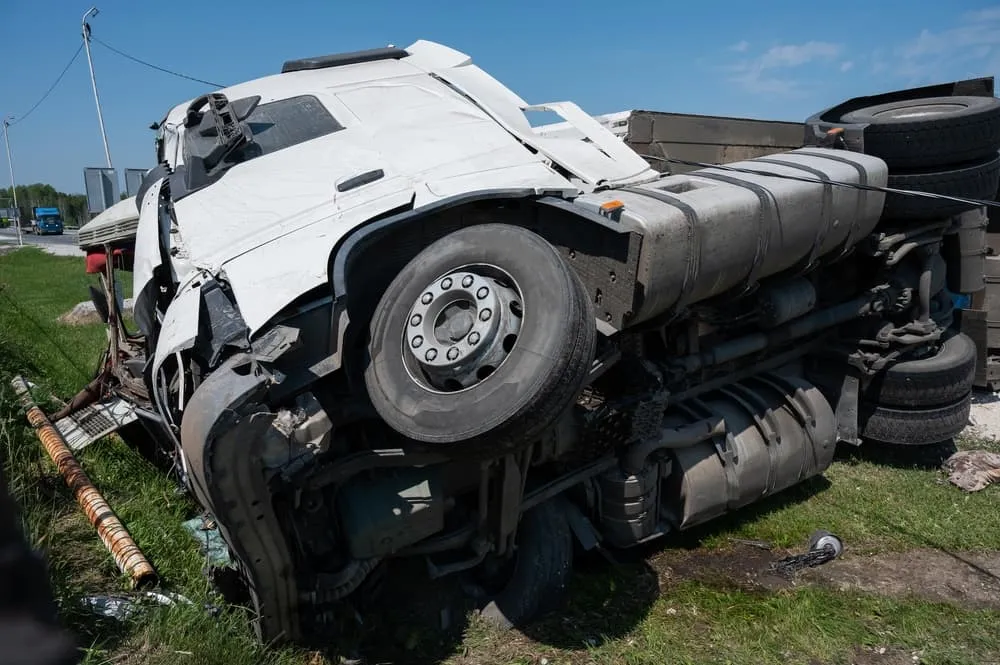
A Truck Overturned In A Traffic Incident

A collision between a car and a truck can result in catastrophic damages, including serious injuries and death. The size and weight of commercial trucks often lead to far more severe outcomes than a typical car crash, and the federal regulations surrounding trucking operations make these cases significantly more complex to navigate.

Additionally, truck crashes usually involve multiple liable parties — the driver, the trucking company, cargo loaders, and others. At Pemberton Personal Injury Law Firm, our Wisconsin truck accident lawyers have investigated hundreds of these cases and know exactly what to look for to build a strong claim on your behalf.

Key Takeaways

  • Truck accidents often cause severe injuries due to vehicle size and federal regulations.
  • Immediately ensure safety, call 911, and seek medical attention — even for minor or delayed injuries.
  • Document the scene: photos, witness info, truck data, and your account; exchange insurance details.
  • Do not speak with the trucking company’s insurance representatives before contacting an attorney.
  • Contact a truck accident lawyer to navigate complex liability, gather records, and negotiate with insurers.
  • Wisconsin personal injury claims must generally be filed within three years; prompt legal guidance helps protect your rights and maximize compensation.

Step 1: Make Sure Everyone Is Safe

Immediately after a truck accident, take action to make sure you and others involved are safe. Move vehicles out of the roadway if possible — this reduces the risk of additional collisions and clears a path for emergency responders. It may not always be possible, especially with large and heavy trucks involved. If vehicles cannot be moved, activate your hazard lights to warn approaching drivers. Trucks often carry additional caution devices like cones, flags, or flares.

Check yourself and your passengers for visible injuries and assess pain levels. Remember, some injuries — like internal trauma or whiplash — may not feel serious in the moment due to adrenaline. Regardless, call 911 to report the wreck and request police and medical assistance.

Step 2: Contact Law Enforcement

In Wisconsin, the law requires you to report any accident resulting in injury, wrongful death, or significant property damage over $1,000 to local police or the Wisconsin Department of Transportation (WisDOT). An accident involving an 18-wheeler or heavy commercial truck will almost certainly require police assistance.

Law enforcement officers will direct traffic, secure the area, and request medical assistance if it hasn’t already been dispatched. Most importantly, the police will create an official accident report — an impartial record that includes details about all involved parties, the accident location and time, and witness statements. You will need this official report for insurance claims, legal proceedings, and any dispute over responsibility or liability.

Step 3: Document the Accident Scene Thoroughly

Even though police will compile their own report, having your own documentation is critical for when you file an insurance claim. Capture as much information as possible while it’s still fresh.

Your documentation should include, where possible:

  • Photographs: Use your smartphone to photograph all vehicles, visible damage, skid marks, road hazards, traffic signs, and any visible injuries to yourself or others.
  • Witness statements: Talk to anyone who saw what happened. Record their statements or take notes, and collect their contact information before memories start to fade.
  • Truck company data: Commercial trucks often have dashcams or black box data recorders that contain critical evidence. Note the trucking company’s name and DOT number from the side of the truck — your lawyer will pursue this data immediately.
  • Your own account: As soon as possible after the accident, write down your recollection of events. Share this only with your attorney, not with insurance companies or other parties.

The information you gather in these first moments can be the difference between a strong claim and a weakened one.

Step 4: Exchange Information with the Other Drivers

Collect insurance details and identifying information directly from other drivers. Use your smartphone to photograph insurance cards and driver’s licenses, and share your own information in return. If a driver cannot provide an insurance card, ask to photograph their vehicle registration instead.

For the truck driver specifically, obtain their driver’s license, the trucking company’s name and contact information, and their insurance details. Trucking companies are subject to specific insurance requirements, and their involvement can significantly affect how your claim proceeds.

Step 5: Preserve All Physical Evidence

Do not repair or dispose of your vehicle until your insurance company and attorney have assessed it. Trucks often involve complex mechanical systems, and potential equipment malfunctions may be crucial in establishing fault. Your attorney may want to arrange an independent inspection of the truck itself before repairs are made or the vehicle is taken out of service.

Step 6: Seek Medical Attention Right Away

Even if you feel fine, see a medical professional as soon as possible after the accident. Not all injuries appear immediately — whiplash, internal injuries, and traumatic brain injuries can take hours or days to manifest symptoms. A prompt medical evaluation can uncover hidden injuries and prevent them from worsening.

A documented medical history that directly links your injuries to the accident is also vital for both insurance claims and legal proceedings. If you delay treatment, insurers will argue that your injuries were not caused by the crash — or that they weren’t as serious as claimed. Don’t give them that opportunity.

“The biggest mistake people make after a truck accident is waiting to see a doctor. By the time symptoms appear, the insurance company’s investigators have already started building a case against you.”
— William Pemberton, Truck Accident Attorney

Step 7: Notify Your Insurance Company

A businessman navigating virtual screens, selecting an insurance button.

Inform your insurance company within the first 24 to 48 hours of the accident. Many policies require timely reporting as a condition of coverage. Prompt notification gives your insurer the time it needs to conduct a thorough investigation. Share any supporting documentation you’ve gathered — including the police report and initial medical records — to expedite the claims process.

Keep your statements factual and brief. Do not speculate about fault or provide more information than is necessary at this stage.

Step 8: Do Not Speak to the Trucking Company’s Insurer

This is one of the most important steps many accident victims overlook. Trucking companies are businesses with full legal teams and insurance adjusters who deploy quickly after a crash — often before victims have left the hospital. Their goal is to limit the company’s liability, and they are trained to ask questions in ways that can undermine your claim.

Politely decline to provide any recorded statements or sign any documents until you have spoken with an attorney. Even a seemingly innocent comment can be used to minimize your compensation. All communication with the trucking company or their insurer should go through your lawyer.

Attorney Pemberton breaks down what insurance companies don’t want you to know after an accident — critical information for anyone involved in a truck crash.

Step 9: Talk to a Wisconsin Truck Accident Attorney

Due to the complexity of truck accident cases, it’s essential to consult a personal injury attorney experienced in commercial truck claims as soon as possible. An experienced lawyer will know exactly how to investigate these cases and what evidence to pursue before it disappears.

Key Evidence Your Attorney Will Pursue

A truck accident investigation goes far beyond a standard car accident. Your attorney will work quickly to obtain and analyze:

  • Hours of service logs: Federal regulations limit how long truck drivers can operate their vehicles at a stretch. Electronic logging devices (ELDs) record this data and can reveal whether fatigue played a role in the crash.
  • Pre-trip inspection reports: The FMCSA requires drivers to thoroughly inspect their trucks before departing. If a driver skipped or falsified this inspection, it can establish negligence.
  • Cargo and freight manifests: Overloaded or improperly balanced cargo can cause a truck to jackknife, tip, or lose control. The manifest reveals what the truck was carrying and whether weight limits were exceeded.
  • Maintenance and inspection records: Trucking companies must retain maintenance records for at least one year per vehicle. These records may reveal a known defect that was never repaired.
  • Event data recorder logs: Many commercial trucks carry black boxes that record speed, braking, steering, and other data at the time of impact. This information can be overwritten quickly once the truck returns to service — your attorney can send a spoliation letter to preserve it immediately.

In addition to this evidence, your attorney may review the driver’s employment and driving history, post-accident drug and alcohol test results, and cell phone records that could indicate distracted driving. Your lawyer can also negotiate with insurance companies on your behalf and, if necessary, file a lawsuit and represent you in court. If you’d like to understand more about your legal options, our guide on what you can sue for in a truck accident covers the types of damages available to Wisconsin victims.

Wisconsin’s Statute of Limitations for Truck Accident Claims

In Wisconsin, plaintiffs generally must file personal injury claims within three years of the date of injury. Once the statute of limitations expires, you lose your right to pursue compensation in court. If you have common questions about the process, our Wisconsin Truck Accident FAQ addresses the most frequently asked questions we hear from clients.

Truck Accident Statistics in Wisconsin

An 18-wheeler consists of a semi-truck (tractor) with a trailer attached. When empty, these vehicles weigh approximately 35,000 pounds; fully loaded, they can reach the federal maximum of 80,000 pounds. The average passenger vehicle weighs between 2,600 and 4,400 pounds. In the event of a collision, the disparity is devastating.

According to the National Safety Council, 5,340 people died in large-truck crashes in 2024 — a figure that is up 30% over the last ten years. Large trucks are defined as any medium or heavy truck with a gross vehicle weight rating greater than 10,000 pounds, and in 2024, more than 120,000 large trucks were involved in crashes that resulted in injuries. The majority of those killed in large-truck crashes — 70% — are occupants of the other vehicle, not the truck.

For Wisconsin specifically, these numbers carry significant local weight. The state’s highway system carries a high volume of commercial freight, and truck accidents remain a serious safety concern on major corridors throughout the state.

Contact Pemberton Personal Injury Law Firm After a Wisconsin Truck Accident

William Pemberton, Madison Truck Accident Lawyer
William Pemberton, Truck Accident Lawyer

If you or someone you love has been injured in a truck accident in Wisconsin, you don’t have to navigate the legal complexities alone. Pemberton Personal Injury Law Firm has the experience and resources to investigate your case, identify every liable party, and fight for the full compensation you deserve. William Pemberton has been named a Super Lawyer for 12 consecutive years and holds a Martindale-Hubbell AV Preeminent Rating — recognition earned through a decade-plus of results for injured Wisconsin residents.

With offices in Baraboo, Madison, Eau Claire, and Sun Prairie, we serve clients throughout Wisconsin. Arrange a free consultation by filling out our online contact form. There is no cost or obligation, and we never collect a fee unless we win your case.

"*" indicates required fields

Free Case Evaluation

"*" indicates required fields

Free Case Evaluation
will pemberton img
ABOUT THE AUTHOR
William Pemberton

Founder & Personal Injury Attorney

William M. Pemberton founded Pemberton Personal Injury Law Firm in 2006 to fight for injured Wisconsinites. Focusing on motor vehicle accidents (car, motorcycle, and pedestrian), Will has been named a Super Lawyer for 12 consecutive years and holds a Martindale-Hubbell AV Preeminent Rating, as well as a Client Champion Platinum Award.

ATTORNEYS

Founder & CEO

Personal Injury Attorney

Litigation Attorney

Personal Injury Attorney

Client Testimonials
Premises Liability
Pemberton Personal Injury Law Firm

“The insurance company is not your friend. Do you know why?”

Personal Injury | Theresa L.

Related Articles:

Related Articles: