When a trucking company or its drivers violate Federal Motor Carrier Safety Administration (FMCSA) regulations, the consequences extend far beyond regulatory fines. Those violations become powerful evidence of negligence in a personal injury lawsuit, and in cases of serious misconduct, they can support a claim for punitive damages on top of your compensatory recovery.
If you were injured in a Wisconsin truck accident caused by an FMCSA violation, our Wisconsin truck accident lawyers can investigate the crash, identify every violation, and hold the responsible parties fully accountable. Reach out promptly, as critical electronic evidence like ELD data and driver logs can be overwritten within days.
Key Takeaways
- FMCSA regulations are federal law. Violations are not mere paperwork errors but evidence of negligence.
- Under the doctrine of negligence per se, proving an FMCSA violation can automatically establish duty and breach, meaning you only need to prove causation and damages.
- The most commonly violated rules involve hours of service, vehicle maintenance, cargo securement, drug and alcohol testing, and driver qualifications.
- FMCSA violations can support claims against the trucking company itself, not just the driver, through vicarious liability and negligent hiring theories.
- Egregious or knowing violations can support punitive damages in addition to standard compensation.
- A preservation letter must be sent immediately to prevent trucking companies from destroying ELD data, driver logs, and maintenance records.
What Is the FMCSA and Why Do Its Rules Matter?
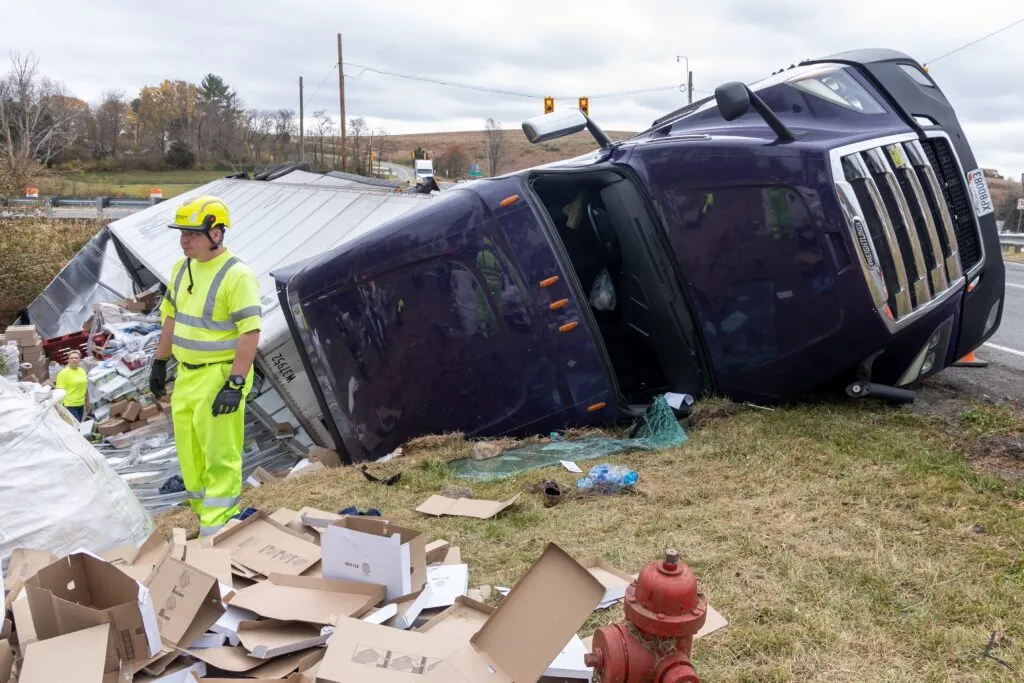
The Federal Motor Carrier Safety Administration is the U.S. Department of Transportation agency responsible for regulating commercial trucking. Its regulations, the Federal Motor Carrier Safety Regulations (FMCSRs), are not suggestions. They are federal law, and every commercial trucking company operating in Wisconsin must comply with them.
These rules exist because an 80,000-pound semi-truck traveling at highway speed is catastrophically dangerous when something goes wrong. Each regulation targets a specific category of preventable disaster: driver fatigue, brake failures, shifting cargo, and unqualified drivers. When a company ignores these rules to cut costs or meet impossible delivery schedules, they choose profits over the safety of everyone on the road.
Negligence Per Se: How FMCSA Violations Prove Your Case
One of the most powerful legal concepts in truck accident cases is negligence per se. Under this doctrine, when a defendant violates a safety statute or regulation designed to prevent the kind of harm that occurred, that violation automatically establishes duty and breach of duty, two of the four elements of negligence.
In practical terms: if you can prove the trucking company violated an FMCSA regulation that caused your crash, you only need to prove causation and damages to win your case, rather than the full four-element negligence analysis. This significantly strengthens your position and simplifies the path to compensation.
The Most Dangerous FMCSA Violations
Hours of Service Violations. Driver fatigue is one of the leading causes of serious truck accidents. Studies show fatigued driving impairs judgment, reaction time, and situational awareness in ways comparable to drunk driving. To address this, FMCSA’s Hours of Service rules for property-carrying drivers set strict limits:
- Maximum 11 hours of driving after 10 consecutive hours off duty
- No driving beyond the 14th consecutive hour after coming on duty
- A mandatory 30-minute break after 8 cumulative hours of driving
- A 60/70-hour limit over 7 or 8 consecutive days
When drivers push past these limits to meet tight delivery deadlines or falsify their ELD records, they become a danger on Wisconsin highways. Attorneys uncover these violations by analyzing ELD data, fuel receipts, toll records, and delivery schedules to reconstruct the driver’s actual hours on the road.
Vehicle Maintenance and Inspection Failures. FMCSA regulations require systematic inspection, repair, and maintenance programs. Every safety-critical component, including brakes, tires, steering, and lighting, must be kept in safe working order and documented. Common maintenance violations that cause crashes include:
- Brake failures: improperly adjusted or worn brakes dramatically increase stopping distance
- Tire defects: bald, cracked, or underinflated tires cause blowouts at highway speed
- Faulty lighting: burned-out headlights or taillights make trucks difficult to see at night
- Defective steering or suspension: worn components cause drivers to lose control
Proving a company knew about a mechanical defect and failed to fix it is powerful evidence of gross negligence and can support punitive damages.
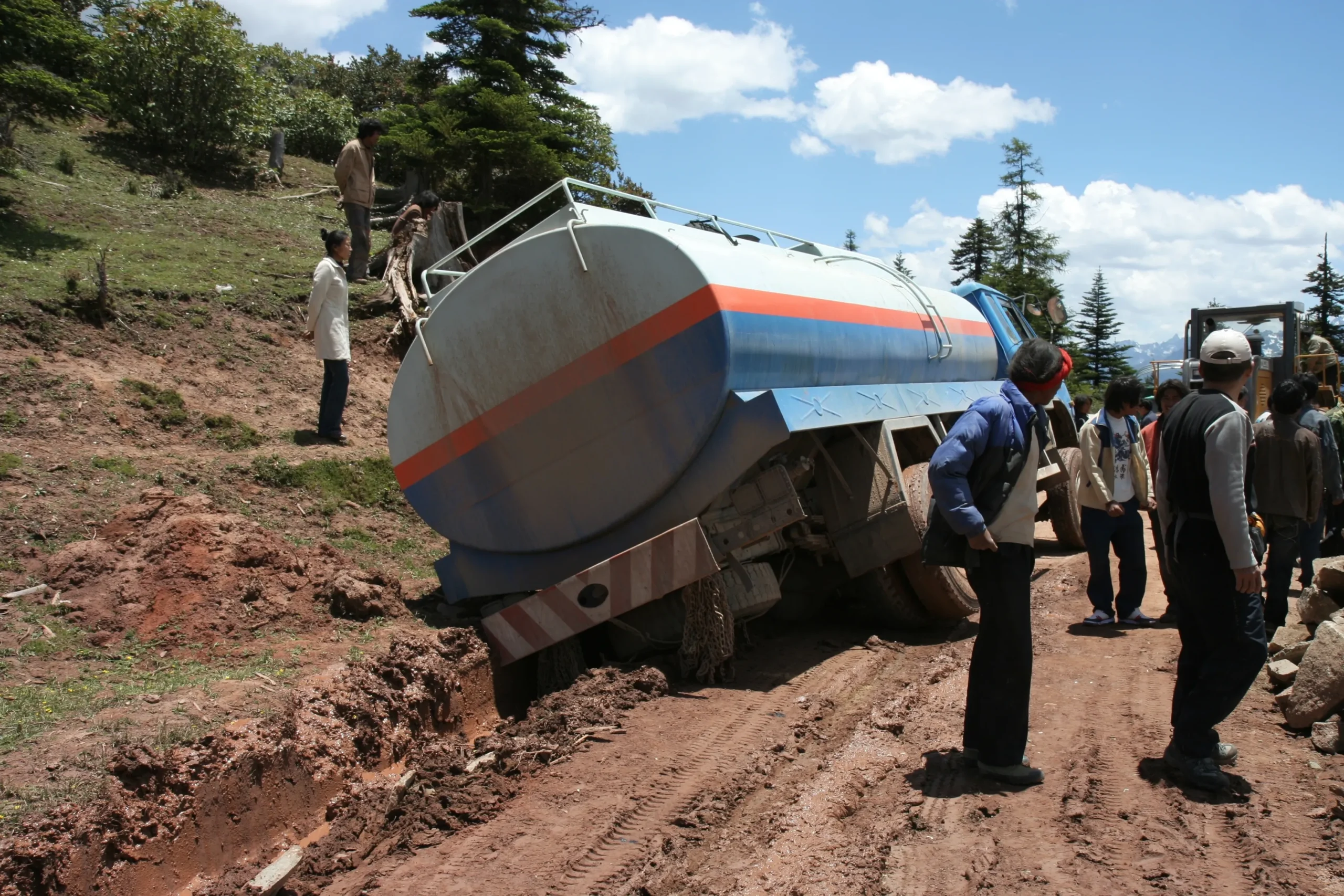
Cargo Loading and Securement Violations. FMCSA’s cargo securement rules specify precise requirements for how different types of cargo must be balanced, distributed, and tied down. When companies ignore these rules, improperly distributed loads cause rollovers and jackknifes, unsecured cargo slides into the roadway creating catastrophic hazards for other drivers, and shifting loads during transit can cause a driver to lose control suddenly.
Drug and Alcohol Testing Failures. FMCSA requires pre-employment drug testing, random testing during employment, and mandatory post-accident testing after serious crashes. Companies that skip required tests, ignore positive results, or keep drivers on the road who should not be there create a direct and foreseeable danger. Evidence of testing failures is often a critical element in negligent hiring and retention claims.
Driver Qualification Violations. Not everyone can legally operate a commercial motor vehicle. FMCSA requires trucking companies to verify that drivers hold a valid Commercial Driver’s License for the appropriate vehicle class, review driving history and safety records, confirm current medical clearance, and perform background checks. Companies that cut corners on driver screening, keeping operators with poor safety records because of driver shortages, may face significant liability when those drivers cause accidents.
How FMCSA Violations Affect Your Legal Claim
Vicarious Liability. When a truck driver violates FMCSA regulations while working, the trucking company is typically liable under the doctrine of vicarious liability, also called respondeat superior. The company does not escape responsibility by blaming the individual driver; the driver’s negligent acts on the job are imputed to the employer. This is critical because it means victims can pursue the full resources of the trucking company and its insurer, not just the driver personally.
Negligent Hiring, Retention, and Supervision. Beyond vicarious liability, a trucking company that knowingly hired an unqualified driver, retained a driver with a history of safety violations, or failed to supervise regulatory compliance faces direct claims for negligent hiring, retention, or supervision. These claims establish the company’s own independent wrongdoing, separate from what the driver did, and further strengthen the case for full compensation.
Punitive Damages. In ordinary negligence cases, compensation covers economic and non-economic losses. But when a trucking company’s conduct was especially reckless or willful, such as knowingly requiring drivers to exceed hours-of-service limits, ignoring documented maintenance failures, or continuing to employ a driver with repeated safety violations, the court may award punitive damages on top of compensatory damages. Punitive damages are designed to punish egregious conduct and deter others. FMCSA violations are frequently the foundation of punitive damage claims in truck accident cases.
Types of Truck Accidents That Result from FMCSA Violations

FMCSA violations produce predictable, catastrophic crash types:
- Rollovers: top-heavy or improperly loaded trailers tip over, especially on curves or hills
- Jackknife accidents: the tractor and trailer fold in on each other, sliding forward and blocking all lanes of traffic
- Rear-end collisions: brake failures or fatigued drivers fail to stop in time
- Falling cargo accidents: unsecured loads spill into the road, causing chain-reaction collisions
- Loss of control: tire blowouts, steering failures, or fatigued driving cause drivers to cross lanes or leave the road entirely
For a full overview of types of truck accidents in Wisconsin, including causes and legal considerations, see our dedicated guide.
Why You Must Act Immediately After a Truck Accident
Trucking companies often deploy rapid-response teams to crash scenes within hours, specifically to document evidence in their favor and limit their liability. Meanwhile, critical electronic data has a short lifespan:
- ELD data (electronic logging device records) can be overwritten within days once the truck returns to service
- Dashcam and onboard camera footage may be automatically deleted on a rolling loop
- Black box and ECM data capturing speed, braking, and throttle inputs can be lost
- Driver logs and inspection records may be altered or destroyed
One of the first things a truck accident attorney does is send a formal legal preservation letter to the trucking company and its insurer, demanding that all relevant evidence be preserved and prohibiting destruction. If the company destroys evidence after receiving this letter, that spoliation of evidence can itself be used against them at trial.
Attorney Pemberton explains four critical reasons why truck accident cases demand legal knowledge and how Pemberton fights for victims against well-funded trucking companies.
Injuries Caused by FMCSA Violation Crashes
When an 80,000-pound commercial truck hits a passenger vehicle because of a regulatory violation, the injuries are almost always severe. Common injuries include traumatic brain injuries and permanent cognitive impairments, complete and incomplete spinal cord injuries and paralysis, broken bones and rib fractures, internal bleeding and organ damage, severe lacerations and permanent scarring, and significant emotional trauma including PTSD. Many of these injuries require ongoing care for years or decades. Your attorney will work with medical and economic professionals to quantify the full lifetime cost of your losses.
For a full overview of injuries suffered in truck accidents, including how they affect compensation value, see our detailed guide.
What is negligence per se and how does it apply to FMCSA violations?
Negligence per se is a legal doctrine that automatically establishes two of the four elements of a negligence claim when a defendant violates a safety statute designed to prevent the type of harm that occurred. In truck accident cases, this means that if a trucking company or driver violated an FMCSA regulation and that violation caused the crash, the court may find duty and breach are automatically established. The injured party then only needs to prove causation and damages, which significantly strengthens the case.
Which FMCSA violations most commonly appear in truck accident lawsuits?
The most commonly cited FMCSA violations in personal injury lawsuits involve hours-of-service limits that drivers exceeded to meet delivery deadlines, vehicle maintenance failures where defective brakes or tires were not repaired despite documented problems, cargo securement failures where improperly loaded freight caused a rollover or spilled into the roadway, and driver qualification failures where a company hired or retained a driver with a disqualifying safety history. Each of these violations creates strong evidence of negligence that an attorney can use to build your case.
How long does ELD data survive after a truck accident?
ELD data, which records a driver’s hours of service and operational activity, can be overwritten within days once the truck returns to service after an accident. Dashcam and onboard camera footage often operates on a rolling loop and may be deleted even faster. This is why it is critical to have an attorney send a formal legal preservation letter to the trucking company as soon as possible after a crash. Once the company receives that notice, destroying evidence becomes spoliation, which can be used against them in court.
Can a trucking company be held directly liable, or only the driver?
A trucking company can be held directly liable through multiple legal theories. Under vicarious liability, the company is responsible for the driver’s negligent acts committed during the course of employment. Beyond that, the company may face direct claims for negligent hiring if it failed to properly screen the driver, negligent retention if it kept a driver with a known safety record on the road, and negligent supervision if it failed to monitor regulatory compliance. These claims allow injured victims to pursue the full financial resources of the company and its insurer.
Contact Pemberton Personal Injury Law Firm for Wisconsin Truck Accident Help

William Pemberton, Wisconsin Truck Accident Lawyer
FMCSA violation cases are among the most complex in personal injury law. They require immediate investigation, deep knowledge of federal trucking regulations, and the resources to go up against well-funded trucking companies and their insurers. William Pemberton has been named a Super Lawyer for 14 consecutive years and holds a Martindale-Hubbell AV Preeminent Rating. Our attorneys know how to find FMCSA violations, preserve critical evidence, and build cases that hold trucking companies fully accountable.
After your accident, knowing what to do immediately can make or break your case. If you need to know who is liable for a truck accident in Wisconsin, we have covered every party in detail. Fill out our online contact form today for a free, no-obligation case evaluation and let us get to work preserving evidence before it is gone.