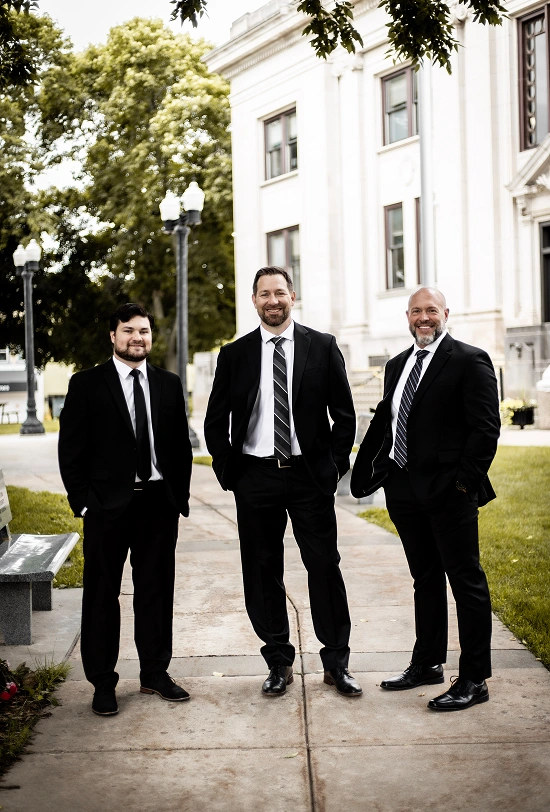
Madison, WI Truck Accident Lawyers Fighting for Injured Victims
A collision with a fully loaded semi-truck, tractor-trailer, or commercial big rig is among the most devastating events a Wisconsin driver can experience. These vehicles can weigh up to 80,000 pounds — roughly 20 times the weight of a typical passenger car — and when they crash, the results are often catastrophic. If you or a family member has been seriously injured in a truck accident in Madison or anywhere in Wisconsin, Pemberton Personal Injury Law Firm is here to fight for every dollar you are owed.
Truck accident cases are fundamentally more complex than standard car accident claims. They involve federal FMCSA regulations, commercial insurance policies with high limits and aggressive defense teams, and often multiple potentially liable parties — including the driver, the trucking company, the cargo loader, and the vehicle manufacturer. You need attorneys who understand these complexities and have the resources to take on the trucking industry. Our Madison personal injury lawyers have done exactly that — and we have the results to show for it. Contact us today for a free, no-obligation consultation. We work on contingency — you pay nothing unless we win.
⚠ Time-Sensitive — Wisconsin Law Limits Your Window to File
You have 3 years from the date of your truck accident to file a personal injury lawsuit in Wisconsin — after that, your right to compensation may be permanently lost.
Pemberton has recovered $40M+ for injured Wisconsinites. We work on contingency — you pay nothing unless we win. Free consultations available 24/7 from our Madison and Baraboo offices.
Wondering what to do after a truck accident in Wisconsin — or whether you even have a case? Attorney William Pemberton walks through what makes truck accident claims different from other personal injury cases and what victims need to know before dealing with a trucking company’s insurance team. Watch below, then read on for a full breakdown of your rights and options.
Our Madison truck accident attorneys know Wisconsin’s legal system, Dane County courts, and the federal regulations that govern the trucking industry. Below is everything you need to understand about your rights, who may be liable, and how Pemberton pursues maximum compensation for truck accident victims.
Why Truck Accidents Are Different From Other Motor Vehicle Crashes
Standard car accident claims are complicated enough — truck accident claims are in a different category entirely. Here is why:
Size and physics: A fully loaded semi can weigh up to 80,000 pounds. The force of impact in a collision with a passenger vehicle at highway speed is devastating in ways that car-to-car accidents rarely are.
Federal regulation: Commercial trucking is governed by the Federal Motor Carrier Safety Administration (FMCSA), which sets strict standards for driver hours, vehicle maintenance, cargo securement, drug testing, and more. Violations of these rules are critical to establishing negligence.
Multiple liable parties: Unlike a car accident, truck accidents can involve the driver, the trucking company, the cargo loader, the vehicle manufacturer, a maintenance contractor, and others. Missing a liable party means leaving compensation on the table.
Aggressive insurance defense: Trucking companies carry high-limit commercial insurance policies and retain experienced defense attorneys immediately after a crash. You need legal representation just as fast.
Time-sensitive evidence: Black box data, driver logs, drug and alcohol test results, and dispatch records can be lost, overwritten, or destroyed quickly. We move fast to preserve what matters.
Wisconsin Truck Accident Statistics
According to the Wisconsin Department of Transportation, large truck crashes result in an annual average of 73 fatalities and 1,748 injuries statewide. On average, Wisconsin sees over 7,000 accidents involving semi-trucks and large commercial vehicles every year. Madison sits at the intersection of I-90, I-94, and I-39/90 — a major corridor for heavy commercial traffic and a frequent site of serious crashes.
Common Types of Truck Accidents in Madison
Jackknife accidents — the trailer swings outward from the cab, often sweeping across multiple lanes
Rollover accidents — trucks with high centers of gravity or improperly loaded cargo tip over on curves or during sudden corrections
Underride accidents — a smaller vehicle slides beneath the rear or side of a trailer; results are almost always catastrophic or fatal
Wide-turn collisions — trucks swing into adjacent lanes while completing turns, striking vehicles alongside or behind them
Blind spot accidents — drivers who fail to check large no-zone areas before lane changes or merges can strike vehicles without ever seeing them
Rear-end collisions — trucks require far more stopping distance than passenger vehicles; fatigued or distracted drivers who cannot stop in time cause devastating crashes
Delivery truck crashes — box trucks and package vans making frequent stops on residential and downtown streets cause collisions through sudden stops, double parking, and drivers rushing to keep tight delivery schedules
Cargo spill accidents — improperly secured loads that fall onto the roadway destroy following vehicles or trigger chain-reaction crashes
Hazardous materials accidents — trucks carrying chemicals or fuel create additional risks of fire, explosion, or toxic exposure
What Causes Truck Accidents in Wisconsin?
Fatigued Driving
The FMCSA’s Hours of Service regulations limit how long truck drivers can operate without rest — but trucking companies frequently pressure drivers to exceed those limits to meet delivery deadlines. A fatigued driver has slower reaction times, impaired judgment, and reduced situational awareness behind the wheel of an 80,000-pound vehicle.
Distracted Driving
Phone use, GPS input, eating, and other distractions are dangerous in any vehicle. In a commercial truck traveling at highway speed, a fraction of a second of inattention can mean hundreds of uncontrolled feet before the driver reacts.
Reckless or Aggressive Driving
Speeding to meet tight delivery deadlines, following too closely, and aggressive lane changes are all common factors in serious truck crashes. Reckless driving at the scale of a commercial vehicle can be catastrophic for everyone in its path.
Intoxicated Driving
Commercial truck drivers are held to a stricter legal standard — a BAC of 0.04% rather than 0.08%. Despite this, drug and alcohol use remains a documented factor in serious truck crashes. When intoxication combines with the size and speed of a large truck, the results are devastating.
Failure to Follow FMCSA Regulations
Beyond hours of service, FMCSA regulations govern cargo securement, vehicle inspections, brake maintenance, and tire condition. Shifts in improperly loaded cargo can cause sudden rollovers. Deferred brake maintenance can make a truck incapable of stopping in time. These failures are often the core of a truck accident negligence case.
Who Is Liable in a Wisconsin Truck Accident?
The truck driver — for reckless driving, fatigue, intoxication, distraction, or FMCSA violations
The trucking company — liable under respondeat superior, or independently for negligent hiring, inadequate training, or pressuring drivers to violate hours-of-service rules
The cargo loading company — if improperly secured freight contributed to the crash
The truck or parts manufacturer — if a mechanical defect or negligent maintenance caused brake failure, tire blowout, or steering malfunction
A government entity — if dangerous road conditions or inadequate signage played a role
Our attorneys conduct a thorough investigation to identify every liable party — because holding all responsible parties accountable is what maximizes your recovery.
Common Injuries in Madison Truck Accidents
Traumatic brain injuries — concussions, skull fractures, hemorrhage, and hematoma that can permanently affect memory and cognition
Spinal cord injuries — herniated discs, nerve damage, and injuries causing partial or complete paralysis
Broken bones and fractures — often complex, multi-site fractures requiring surgery and extended rehabilitation
Internal injuries — organ damage from blunt-force trauma that may not produce immediate symptoms
Soft tissue injuries — severe whiplash and torn ligaments that can cause chronic pain lasting years
Wrongful death — surviving family members may bring a wrongful death claim under Wisconsin Statute § 895.04
What Damages Are Available in a Wisconsin Truck Accident Case?
Past and future medical expenses — emergency care, hospitalization, surgery, rehabilitation, and long-term care
Lost wages and reduced earning capacity
Pain and suffering — including PTSD and anxiety that frequently follow serious truck accidents
Property damage to your vehicle and personal belongings
Loss of enjoyment of life
Wrongful death damages — loss of financial support, loss of companionship, and funeral expenses
Can I Seek Punitive Damages in a Truck Accident Case?
Punitive damages may be available when the at-fault party acted with willful, wanton, or reckless disregard for public safety — such as a trucking company that knowingly falsified driver logs to exceed FMCSA limits. In Wisconsin, punitive damages are capped at twice the compensatory damages awarded or $200,000, whichever is greater. Our attorneys evaluate every case for punitive damage eligibility and pursue it where the evidence supports it.
What to Do After a Truck Accident in Madison
Call 911 immediately — ensure police respond and file an official report
Seek medical attention right away — even if you feel okay; internal injuries may not show symptoms immediately
Document the scene — photograph the truck, your vehicle, road conditions, skid marks, cargo, and visible injuries; collect witness contact information
Do not speak to the trucking company or their insurer — their representatives may arrive quickly; decline all statements until you have legal representation
Contact Pemberton immediately — truck accident evidence is time-sensitive; the sooner we get involved, the better we protect your case
Why Choose Pemberton for Your Madison Truck Accident Case?
At Pemberton Personal Injury Law Firm, we bring the experience, resources, and determination to take on major trucking companies and their insurers. Our results include a $575,000 recovery for a client who sustained approximately $120,000 in medical expenses in a serious trucking accident — a case where we partnered with co-counsel to build a case strong enough to secure nearly five times the medical bills in compensation.
Past outcomes do not guarantee future results. What they reflect is the commitment and depth of resources we bring to every truck accident case we take on.
Frequently Asked Questions About Wisconsin Truck Accident Claims
How do I know if I have a valid truck accident claim?
You likely have a valid claim if your injuries were caused by the negligence of a truck driver, trucking company, or another party involved in the operation or maintenance of the vehicle. Common grounds include driver fatigue in violation of FMCSA hours-of-service rules, impaired or distracted driving, mechanical failures due to deferred maintenance, and improperly secured cargo. The best way to evaluate your situation is to speak with a truck accident attorney as soon as possible.
Who can be held liable for my truck accident injuries?
Liability often extends beyond the driver to include the trucking company, the cargo loading company, the truck or parts manufacturer if a defect caused a mechanical failure, and potentially a government entity if dangerous road conditions played a role. Our attorneys conduct a thorough investigation to identify every liable party so nothing is overlooked.
How long do I have to file a truck accident lawsuit in Wisconsin?
Under Wisconsin Statute section 893.54, you generally have 3 years from the date of your injury to file a personal injury lawsuit. For wrongful death claims, the window begins on the date of death under section 895.04. However, truck accident evidence like black box data and driver logs is time-sensitive — contact an attorney as soon as possible after the crash.
What compensation can I pursue after a truck accident?
You may be entitled to recover past and future medical expenses, lost wages and reduced earning capacity, pain and suffering, property damage, and loss of enjoyment of life. In cases involving particularly reckless conduct, punitive damages may also be available in Wisconsin, capped at twice the compensatory amount or $200,000, whichever is greater.
What if I was partly at fault for the truck accident?
Wisconsin follows a modified comparative fault rule under section 895.045. As long as your share of fault does not exceed 50%, you may still recover compensation — though your award is reduced proportionally by your percentage of fault. Trucking company insurers routinely try to shift blame onto the victim. Our attorneys investigate independently and push back hard against unwarranted fault assignments.
Should I speak to the trucking company’s insurance adjuster?
No. Trucking companies carry large commercial insurance policies and their adjusters are trained to minimize payouts from the moment a crash is reported. Do not give a recorded statement, do not sign any release, and do not accept any early settlement offer before consulting with a truck accident attorney. Early offers are almost always far below the true value of a serious truck accident claim.
Free Consultation from Our Madison Truck Accident Lawyers
If you or a loved one has been seriously injured in a truck accident in Madison or anywhere in Wisconsin, do not wait to get legal help. The trucking company’s attorneys and insurers are already working to minimize their liability. Pemberton Personal Injury Law Firm is here to level the playing field.
Insurance companies profit when you lose. Every claim they deny, every settlement they lowball, every injured person they convince to accept less—that’s money in their pocket. And they’re very good at what they do.
But So Are We.
At Pemberton Personal Injury Law Firm, we’ve made it our mission to take on the insurance companies that put profits over people. We know every underhanded tactic they’ll use to cheat you out of fair compensation, and we’re prepared to fight fire with fire. When insurance adjusters see us coming, they know they’re in for a real battle. You didn’t ask to be injured.
You didn’t ask to fight a billion-dollar corporation. But now that you’re here, you deserve lawyers who will go to war for you. We don’t settle for less than full compensation, we don’t back down from tough fights, and we don’t let insurance companies bully our clients. PERIOD.
Free Case Evaluation From Our Wisconsin Truck Accident Lawyers
Life following a serious injury can bring intense emotions and pain. Accident victims often hope to get their lives back on track, only to be held back by the demands involved with personal injury claims. This is especially the case for individuals who become hospitalized. Wherever you are in the process, we’d be glad to help.
Our injury lawyers in Wisconsin step up to represent you. At Pemberton, we provide this advocacy at every step in the injury claims process so you can be on your way to feeling like yourself again.
Contact our Wisconsin personal injury attorneys at (608) 448-6242 to speak with one of our experienced attorneys. We will create a plan together to help you protect your rights and get you back to your life.
The client was seriously injured in a trucking accident, sustaining approximately $120,000 in medical expenses. After thorough treatment and recovery, we partnered with co-counsel to build a strong case. Despite questions about future complications, we successfully negotiated a $575,000 settlement to compensate the client for injuries sustained, medical treatment received, and the impact on quality of life.
The client was rear-ended by a semi while parked on the side of the highway. He sustained significant back injuries, had surgery the day of the crash, but very little follow up treatment after the surgery. We obtained double the insurance company’s initial offer of $250,000.
Client sustained life-threatening injuries after being hit by a driver who passed away at the scene. We obtained close to the policy limits with an additional claimant pre-suit and negotiated medical liens down over $250,000.
In this car accident case, the client suffered catastrophic injuries in a head-on collision when the at-fault driver crossed the center line. Her injuries included multiple broken bones in the chest, ribs, wrist, and ankle, internal injuries requiring intestinal surgery, and a damaged artery in the spine. With medical expenses exceeding $4,000, we secured the at-fault driver’s full insurance coverage and pursued an additional $1,000,000 from the client’s own insurance policy. We also negotiated a reduction of more than $468,000 in outstanding medical costs to ensure the client received maximum financial recovery for her life-altering injuries and permanent impact on her ability to work.
The client’s loved one suffered a fatal injury in an auto collision that resulted in over $382,000 in medical bills. Acting as the family’s second attorney, we navigated difficult policy-limit issues and secured a $1,000,000 settlement. While the case had greater overall value and the family would have liked a higher recovery, they chose to settle to avoid prolonged litigation and move forward.
The cf_use_ob cookie informs Cloudflare to fetch the requested resource from the Always Online cache on the designated port. Applicable values are: 0, 80, and 443. The cf_ob_info and cf_use_ob cookies are persistent cookies that expire after 30 seconds.
session
__cfwaitingroom
The __cfwaitingroom cookie is only used to track visitors that access a waiting room enabled host and path combination for a zone. Visitors using a browser that does not accept cookies cannot visit the host and path combination while the waiting room is active.
session
cf_chl_rc_i
These cookies are for internal use which allows Cloudflare to identify production issues on clients.
session
cf_chl_rc_ni
These cookies are for internal use which allows Cloudflare to identify production issues on clients.
session
cf_chl_rc_m
These cookies are for internal use which allows Cloudflare to identify production issues on clients.
session
__cfruid
Used by the content network, Cloudflare, to identify trusted web traffic.
session
__cf_bm
Cloudflare's bot products identify and mitigate automated traffic to protect your site from bad bots. Cloudflare places the __cf_bm cookie on End User devices that access Customer sites that are protected by Bot Management or Bot Fight Mode. The __cf_bm cookie is necessary for the proper functioning of these bot solutions.
session
__cflb
When enabling session affinity with Cloudflare Load Balancer, Cloudflare sets a __cflb cookie with a unique value on the first response to the requesting client. Cloudflare routes future requests to the same origin, optimizing network resource usage. In the event of a failover, Cloudflare sets a new __cflb cookie to direct future requests to the failover pool.
session
_cfuvid
The _cfuvid cookie is only set when a site uses this option in a Rate Limiting Rule, and is only used to allow the Cloudflare WAF to distinguish individual users who share the same IP address.
session
cf_clearance
Whether a CAPTCHA or Javascript challenge has been solved.
session
__cfseq
Sequence rules uses cookies to track the order of requests a user has made and the time between requests and makes them available via Cloudflare Rules. This allows you to write rules that match valid or invalid sequences. The specific cookies used to validate sequences are called sequence cookies.
session
cf_ob_info
The cf_ob_info cookie provides information on: The HTTP Status Code returned by the origin web server. The Ray ID of the original failed request. The data center serving the traffic
session
These cookies are needed for adding comments on this website.
Name
Description
Duration
comment_author
Used to track the user across multiple sessions.
Session
comment_author_email
Used to track the user across multiple sessions.
Session
comment_author_url
Used to track the user across multiple sessions.
Session
Google reCAPTCHA helps protect websites from spam and abuse by verifying user interactions through challenges.
Name
Description
Duration
_GRECAPTCHA
Google reCAPTCHA sets a necessary cookie (_GRECAPTCHA) when executed for the purpose of providing its risk analysis.
179 days
Google Tag Manager simplifies the management of marketing tags on your website without code changes.
Name
Description
Duration
cookiePreferences
Registers cookie preferences of a user
2 years
td
Registers statistical data on users' behaviour on the website. Used for internal analytics by the website operator.
session
Statistics cookies collect information anonymously. This information helps us understand how visitors use our website.
Name
Description
Duration
calltrk_session_id
-
calltrk_referrer
6 months
calltrk_nearest_tld
10 years
calltrk_landing
6 months
calltrk_fcid
-
Name
Description
Duration
_clsk
24 hours
_clck
-
Google Analytics is a powerful tool that tracks and analyzes website traffic for informed marketing decisions.
Contains information related to marketing campaigns of the user. These are shared with Google AdWords / Google Ads when the Google Ads and Google Analytics accounts are linked together.
90 days
__utma
ID used to identify users and sessions
2 years after last activity
__utmt
Used to monitor number of Google Analytics server requests
10 minutes
__utmb
Used to distinguish new sessions and visits. This cookie is set when the GA.js javascript library is loaded and there is no existing __utmb cookie. The cookie is updated every time data is sent to the Google Analytics server.
30 minutes after last activity
__utmc
Used only with old Urchin versions of Google Analytics and not with GA.js. Was used to distinguish between new sessions and visits at the end of a session.
End of session (browser)
__utmz
Contains information about the traffic source or campaign that directed user to the website. The cookie is set when the GA.js javascript is loaded and updated when data is sent to the Google Anaytics server
6 months after last activity
__utmv
Contains custom information set by the web developer via the _setCustomVar method in Google Analytics. This cookie is updated every time new data is sent to the Google Analytics server.
2 years after last activity
__utmx
Used to determine whether a user is included in an A / B or Multivariate test.
18 months
_ga
ID used to identify users
2 years
_gali
Used by Google Analytics to determine which links on a page are being clicked
30 seconds
_ga_
ID used to identify users
2 years
_gid
ID used to identify users for 24 hours after last activity
24 hours
_gat
Used to monitor number of Google Analytics server requests when using Google Tag Manager
1 minute
Marketing cookies are used to follow visitors to websites. The intention is to show ads that are relevant and engaging to the individual user.
Facebook Pixel is a web analytics service that tracks and reports website traffic.
These cookies are used by Google to store user preferences and information while viewing Google mapped pages.
1 month
OGP
This cookie is used by Google to activate and track the Google Maps functionality.
2 months
Free Guide
How to Deal With Insurance After an Accident
Tell us where to send it. Enter your name and email and we’ll deliver your free download right away.
"*" indicates required fields
By submitting, you agree to be contacted by our team about your download and how we can help. We’ll never share your information. Submitting this form does not create an attorney-client relationship.
Free Guide
How to Choose the Right Wisconsin Injury Lawyer
Tell us where to send it. Enter your name and email and we’ll deliver your free download right away.
"*" indicates required fields
By submitting, you agree to be contacted by our team about your download and how we can help. We’ll never share your information. Submitting this form does not create an attorney-client relationship.
Free Guide
Serious Injury & Brain Injury Guide for Wisconsin Families
Tell us where to send it. Enter your name and email and we’ll deliver your free download right away.
"*" indicates required fields
By submitting, you agree to be contacted by our team about your download and how we can help. We’ll never share your information. Submitting this form does not create an attorney-client relationship.
Free Guide
Wisconsin's Personal Injury Law Cheat Sheet
Tell us where to send it. Enter your name and email and we’ll deliver your free download right away.
"*" indicates required fields
By submitting, you agree to be contacted by our team about your download and how we can help. We’ll never share your information. Submitting this form does not create an attorney-client relationship.
Free Guide
A Guide to Auto Property Damage Claims
Tell us where to send it. Enter your name and email and we’ll deliver your free download right away.
"*" indicates required fields
By submitting, you agree to be contacted by our team about your download and how we can help. We’ll never share your information. Submitting this form does not create an attorney-client relationship.
Free Guide
Carbon Monoxide Exposure Symptom Checklist
Tell us where to send it. Enter your name and email and we’ll deliver your free download right away.
"*" indicates required fields
By submitting, you agree to be contacted by our team about your download and how we can help. We’ll never share your information. Submitting this form does not create an attorney-client relationship.
Free Guide
Doctor Visit Symptom Tracker
Tell us where to send it. Enter your name and email and we’ll deliver your free download right away.
"*" indicates required fields
By submitting, you agree to be contacted by our team about your download and how we can help. We’ll never share your information. Submitting this form does not create an attorney-client relationship.
Free Guide
Wisconsin Personal Injury Claims: A Simple Guide
Tell us where to send it. Enter your name and email and we’ll deliver your free download right away.
"*" indicates required fields
By submitting, you agree to be contacted by our team about your download and how we can help. We’ll never share your information. Submitting this form does not create an attorney-client relationship.
Free Guide
What to Do After a Car Accident in Wisconsin
Tell us where to send it. Enter your name and email and we’ll deliver your free download right away.
"*" indicates required fields
By submitting, you agree to be contacted by our team about your download and how we can help. We’ll never share your information. Submitting this form does not create an attorney-client relationship.